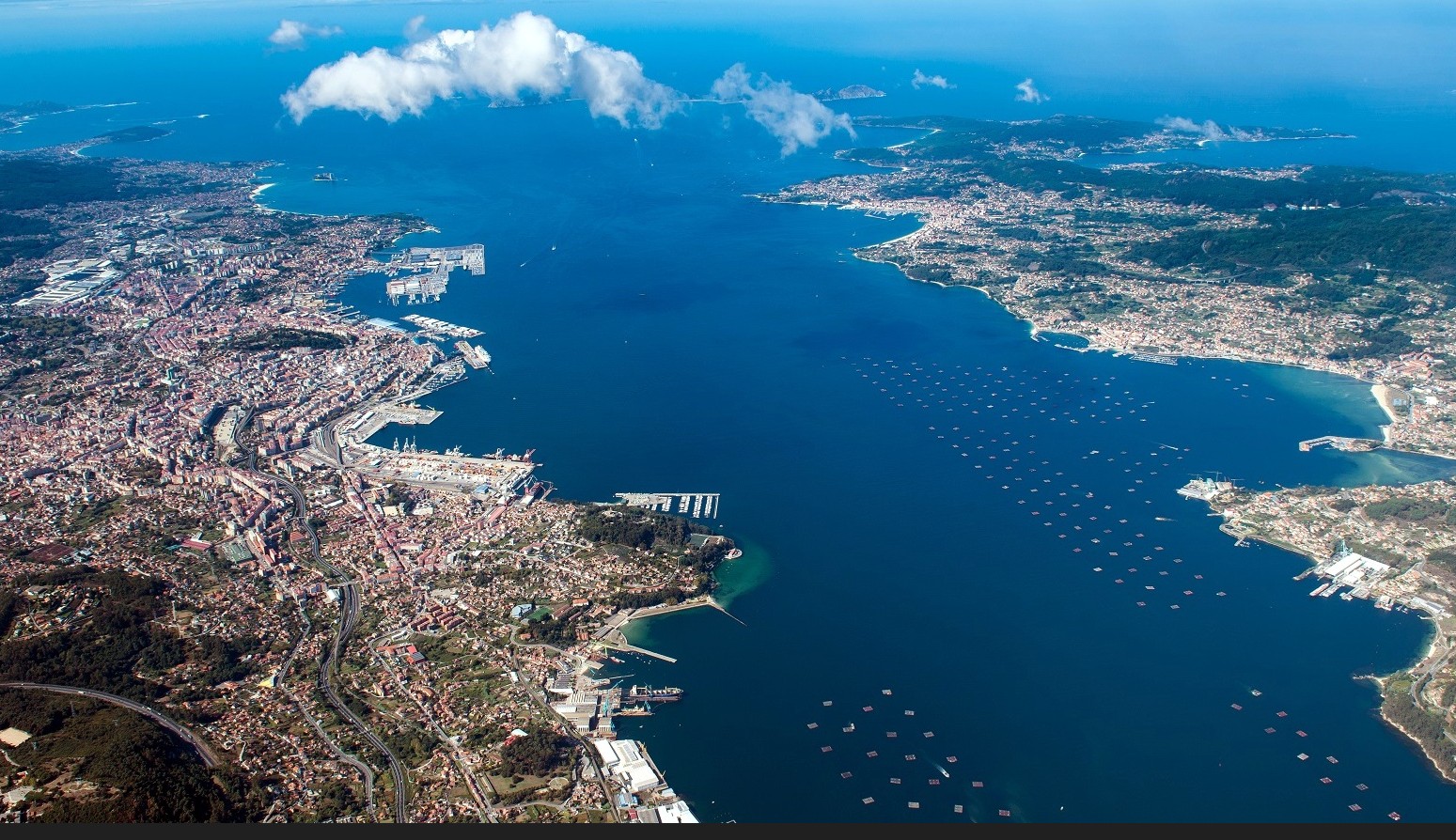
The Port of Vigo is not just aiming to keep pace with growth—it intends to lead the next decade. Its president, Carlos Botana, has presented to the Board of Directors the tender for the new Strategic Plan 2027–2035, a forward-looking roadmap designed to consolidate the port as a major logistics and industrial hub on the Iberian Atlantic façade.
With an investment of €150,000 and a drafting period of 10 months, the plan adopts a long-term perspective extending to 2040, aimed at strengthening Vigo’s position in an increasingly competitive global market.
This strategy stems not from necessity, but from strength. Vigo has established itself as Spain’s fourth port in maritime connections with America, Africa, and Asia. This connectivity enabled the port to close 2025 with over 5.5 million tonnes of traffic and record figures in key sectors. From the 674,000 vehicles handled in Bouzas to the historic high of 309,000 containers and the national leadership of O Berbés in fisheries, current momentum is set to become a lasting structural advantage for the surrounding business ecosystem.
Despite a challenging global context marked by geopolitical tensions and a recent cyberattack, the Port of Vigo has maintained steady growth in the first quarter of 2026:
- Total traffic reached 1,204,925 tonnes (+0.3%)
- General cargo increased by +0.8%, driven by container terminals
- Containers rose by +8.9% in tonnage and +1.7% in TEUs
- Key sectors such as fruit (+56.3%), automotive, and frozen fish led growth
- Vessel calls increased by +9.8% (416 ships), highlighting operational resilience
Innovation, sustainability, and blue economy
The Strategic Plan places technological innovation and energy transition at its core. Botana emphasized a shift toward a more efficient, service-oriented business model, where logistics platforms such as PLISAN and improved rail intermodality act as competitiveness drivers.
“It is not just about moving goods, but about leading decarbonisation and the development of the blue economy, integrating artificial intelligence to anticipate logistical challenges over the next fifteen years,” he stated.
The plan aligns with the policies of Puertos del Estado and the European Union, focusing on strategic sectors such as shipbuilding and repair. It will function as a “living document,” reviewed every four years.
Consensus-driven governance and port-city integration
To ensure its success, the Port of Vigo is committed to a transparent and participatory governance model. The strategy will be shaped through open dialogue with operators, institutions, and local stakeholders, leveraging Blue Growth working groups and the active involvement of the Users’ Federation.
This approach ensures that port development advances in parallel with social sustainability and port-city integration, translating economic success into employment and well-being for the wider community.
Vigo as a leading cruise destination
During the Board meeting, Botana also reported on his recent trip to Miami, where he met with major cruise lines:
- More than 120 cruise calls confirmed for 2026
- Around 140 cruise calls projected for 2027, with 330,000–340,000 passengers (record year)
- Strategic goal: position Vigo and its region—including Baiona, Tui, and Ribeira Sacra—as a distinctive and attractive tourism destination