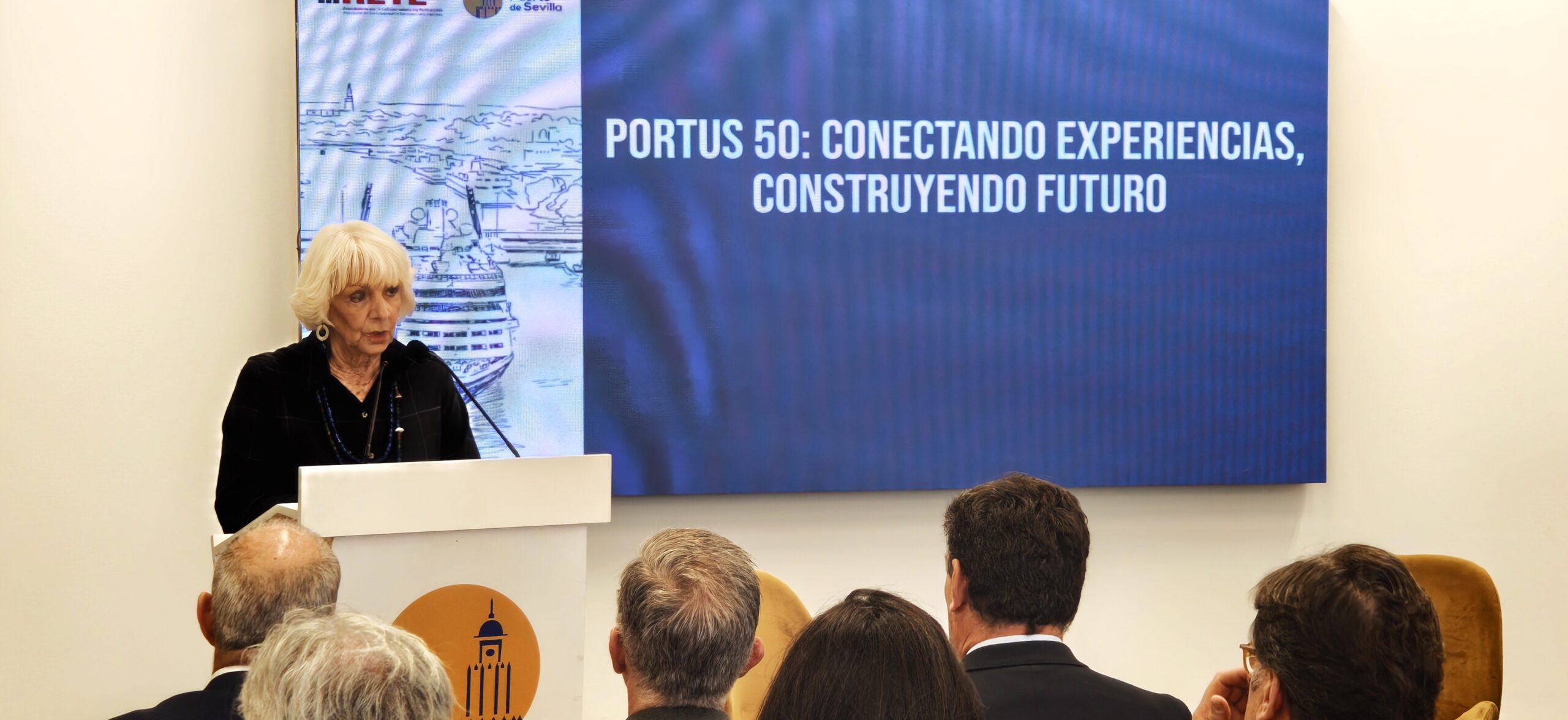
The Association for the Collaboration between Ports and Cities (RETE) held this Thursday in Seville the presentation event for Issue 50 of its digital scientific journal PORTUS, a commemorative edition that marks a milestone in the organization’s 25 years of editorial trajectory and reinforces its position as an international benchmark in the field of port-city integration.
The event, held at the Auditorium of Turismo de Sevilla and organized in collaboration with the Port Authority of Seville, brought together experts, port authorities and institutional representatives for a session focused on analysis, knowledge exchange and debate on the challenges and opportunities facing port cities in the current context.
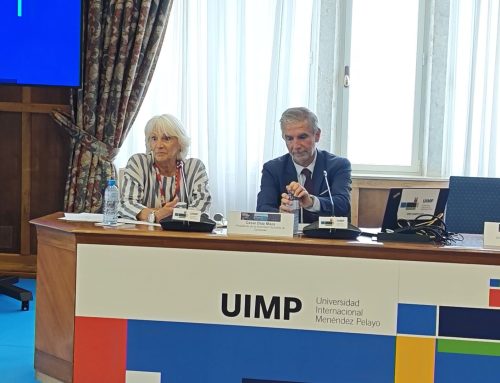
The session was opened by the President of RETE, Teófila Martínez, and the President of the Port Authority of Seville and Vice President of RETE, Rafael Carmona, who both highlighted the relevance of the publication and the dialogue space generated around it.
Teófila Martínez emphasized the strategic role of PORTUS as a repository of accumulated knowledge, underlining that the publication of Issue 50 goes beyond the editorial sphere to become a recognition of RETE’s 25-year trajectory. In her speech, she noted that the journal has, since its inception, served to document and share collective learning on the evolution of port-city relations at an international scale, reflecting how different cities have progressed towards increasingly complex integration models. From a more operational perspective, she highlighted the case of Cádiz as a paradigmatic example of urban opportunity, with the incorporation of nearly 400,000 square meters of port land into the city—an area described as “vital” to alleviate the structural shortage of space in the historic center and to generate new green areas, facilities and economic activity.
For his part, Rafael Carmona defended port-city integration as a central axis of the Port of Seville’s strategy, highlighting the transformation already carried out in former docks such as El Arenal, Nueva York and Las Delicias, while advancing a new phase of reconversion of historic port spaces. In this regard, he explained that the Port Authority is working on the urban reorganization of docks, warehouses and facilities linked to the legacy of the Alfonso XIII canal, with the aim that, by 2029, these spaces will be fully accessible for public use. He also highlighted the restoration of the Alfonso XIII bridge as an iconic element within a large port park, conceived as a viewpoint and a space connecting citizens with logistical activity, integrating heritage, landscape and port operations into a single urban experience.
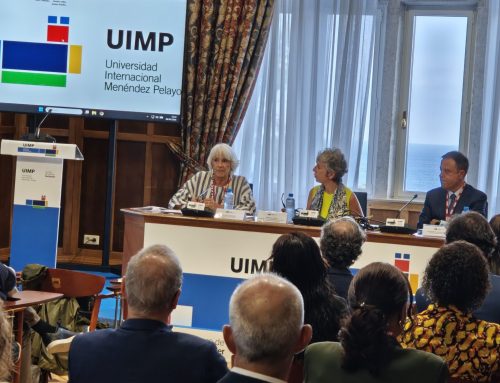
The event continued with the session “Portus 50: A legacy in conversation,” a dialogue of high symbolic and technical value featuring Rinio Bruttomesso, founder of RETE and the PORTUS journal, and José Luis Estrada, the association’s first president and the journal’s director in recent years. Moderated by RETE’s President, this session traced the evolution of port-city thinking over a quarter of a century, contextualizing achievements and remaining challenges. The discussion highlighted the transition from models focused on land-use conflicts and port externalities to approaches based on intelligent coexistence, where logistical competitiveness, urban quality and cultural identity are integrated into shared strategies. It also underscored the growing relevance of regenerated waterfronts, port-city branding strategies and the incorporation of maritime culture as an intangible asset, shaping a global narrative in which the port is no longer an isolated infrastructure but an active agent of urban development.
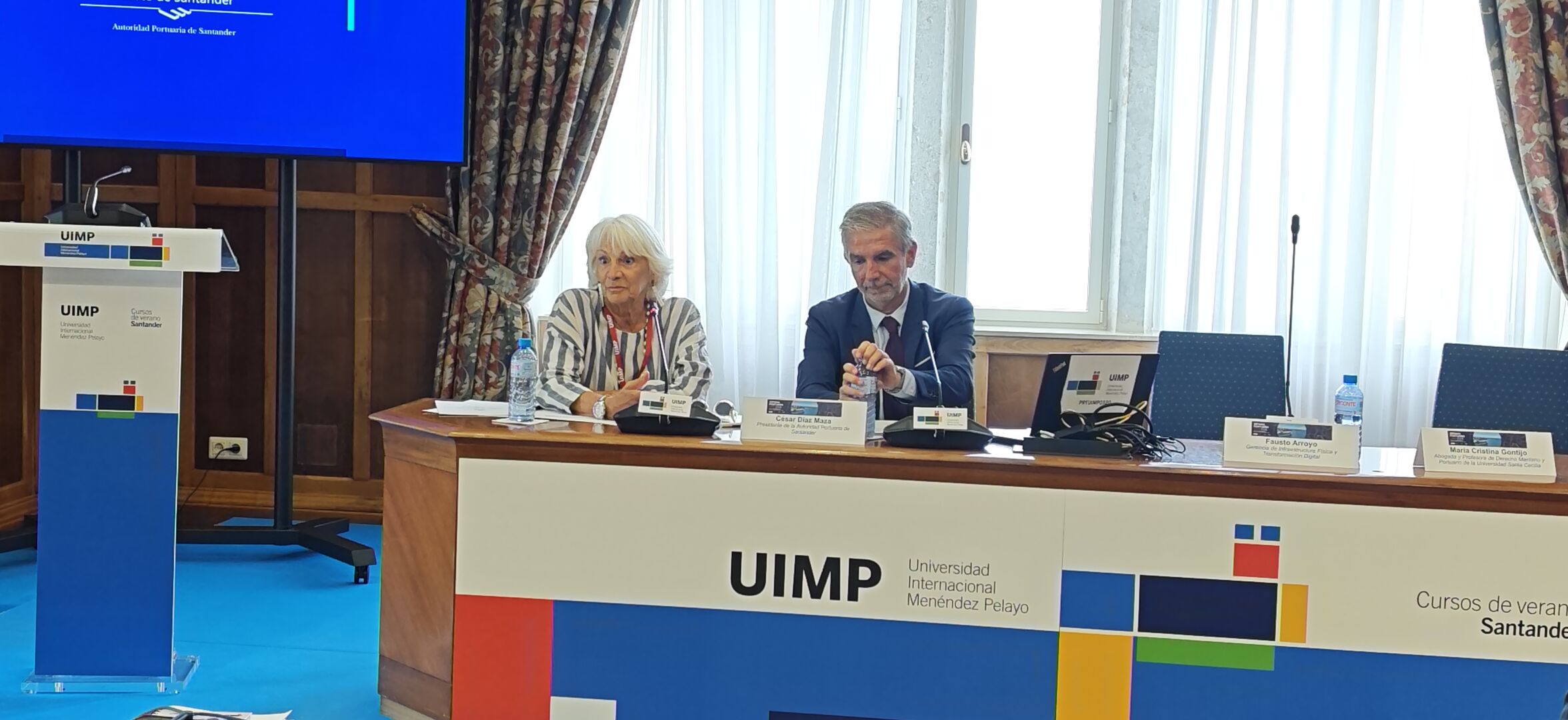
Subsequently, the debate moved to the round table “Port-city integration under discussion,” where experiences and strategic perspectives from different territories were shared. Participants included Ibon Areso, former Mayor of Bilbao and international urban planning expert; David Pino, Director of Port Vell in Barcelona; César Díaz, President of the Port Authority of Santander; and José María Cárdenas, founder of Eddea and a key figure in the development of Seville’s port urban district. Moderated by Rafael Carmona, the session addressed issues such as waterfront regeneration, the coexistence between port activity and public use, sustainability and shared governance models, offering diverse perspectives from public management, urban planning and port operations. From a technical standpoint, the debate highlighted that today’s main challenges lie not only in the physical transformation of spaces, but in managing complex balances: reconciling logistical efficiency with urban openness, integrating technological innovation without losing social cohesion, and articulating multi-level governance models involving port authorities, local administrations and economic stakeholders. In this context, particular emphasis was placed on decarbonization, digitalization of logistics chains and the need to develop flagship projects that activate port-related economic ecosystems, consolidating the port’s role as a driver of sustainable and competitive urban development.
The event concluded with the institutional closing and a networking session held in a unique setting aboard the replica of the Nao Victoria 500, reinforcing the symbolic and experiential nature of a day that highlighted the role of maritime culture in the identity of port cities.
The publication of Issue 50 of PORTUS represents a new step in consolidating RETE as a leading international platform for the analysis of port-city relations, having surpassed 1,500 published articles and brought together experts, academics, institutional representatives and industry professionals throughout its trajectory. This commemorative edition includes a special section featuring 18 articles that review the evolution of port-city relations over the past quarter century, addressing topics such as urban regeneration, sustainability, innovation and the cultural identity of waterfronts.