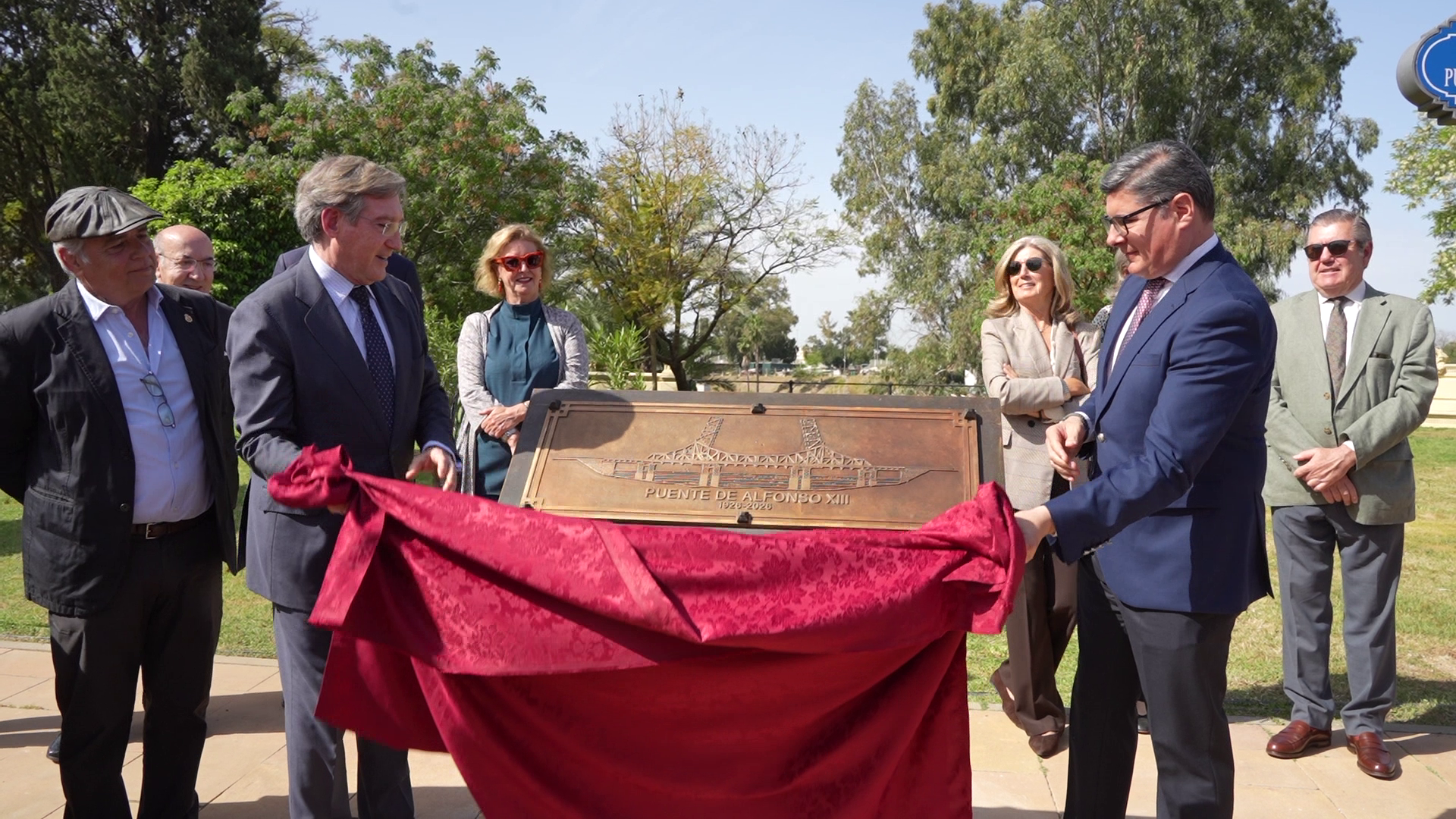
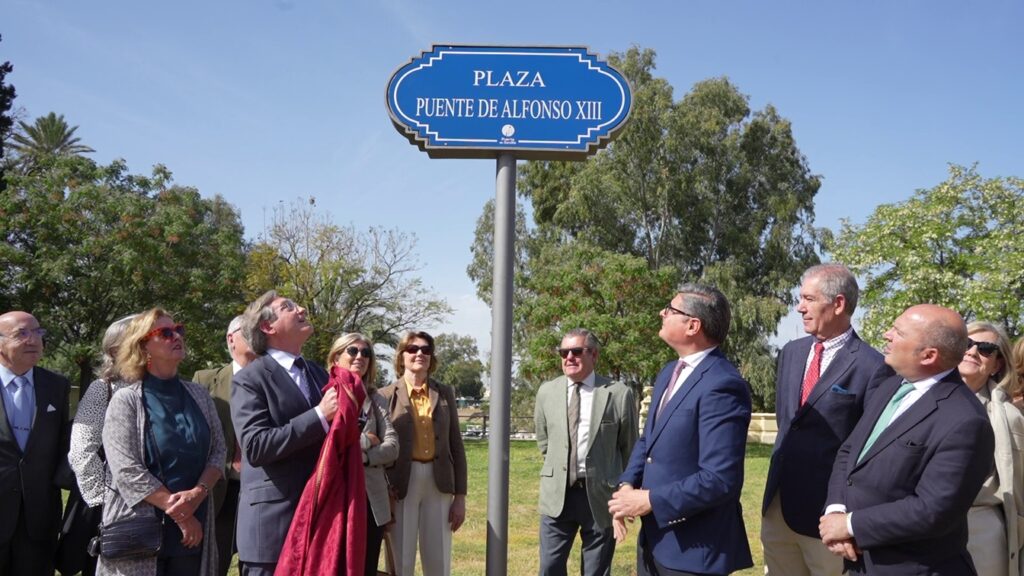
The Corta de Tablada and the Alfonso XIII Bridge represented a major transformation for the Port of Seville, the result of the vision of engineers Moliní and Branckenbury, whose descendants attended today’s commemorative event. Thanks to the new cut, the city moved closer to the sea via the Guadalquivir River, bypassing the meander of Los Gordales—where the Real de la Feria grounds are now located—while the Tablada quay increased port capacity with new cranes, warehouses, and “the iconic port sheds with undulating roofs,” the president added.
The Alfonso XIII Bridge, for its part, became a key element in connecting the city and ensuring the operation of the new port. Its bascule design made it especially versatile, as it could accommodate navigation, urban traffic, and rail transport. Its inauguration, on the eve of the 1929 Ibero-American Exposition and alongside the development of the southern part of the city, gave it a prominent role in Seville’s life.
Manufactured by the company La Maquinista Terrestre y Marítima of Barcelona, the Alfonso XIII Bridge employed a system based on a U.S. patent by the Scherzer Rolling Lift Bridge Co. This mechanism enabled the simultaneous rotation of two bascule leaves to open the central span, allowing ships to access Seville’s inner docks. It was also designed with a 56º axis, facilitating the turns required for railway access.
Centenary activities
Today’s event is part of a commemorative programme promoted by the Port Authority of Seville, which includes free guided visits to the Alfonso XIII Bridge under the “Open Bridge” initiative, available upon registration at the following link:
https://www.puertodesevilla.com/el-puerto-y-su-entorno/museo-del-puerto-de-sevilla
In addition, until 26 April, the outdoor exhibition “The Work that Transformed the Port of Seville” can be visited next to the Rectorate of the University of Seville, on Avenida del Cid. The exhibition features unique photographs, including images of the now-disappeared Los Gordales meander; plans of the Las Razas warehouses designed by José Luis de Casso; and photographs documenting the construction of the Iron Bridge and the excavation of the Corta de Tablada. It also includes an aerial photograph of the inauguration day, when Alfonso XIII crossed the Iron Bridge aboard the Argentine cruiser Buenos Aires.
The future of the bridge
“The future of the bridge is being rewritten within the Port-City Urban District, where it is planned to become the central element of the Bridge Theatre,” said Rafael Carmona. The Port Authority is currently working with the Andalusian Institute of Historical Heritage on drafting the project for its restoration.
“Just as happened one hundred years ago, we continue to promote a vision of modernity—one that will allow us to restore, repurpose, and give new life to these spaces, building port and city together once again,” the APS president concluded..