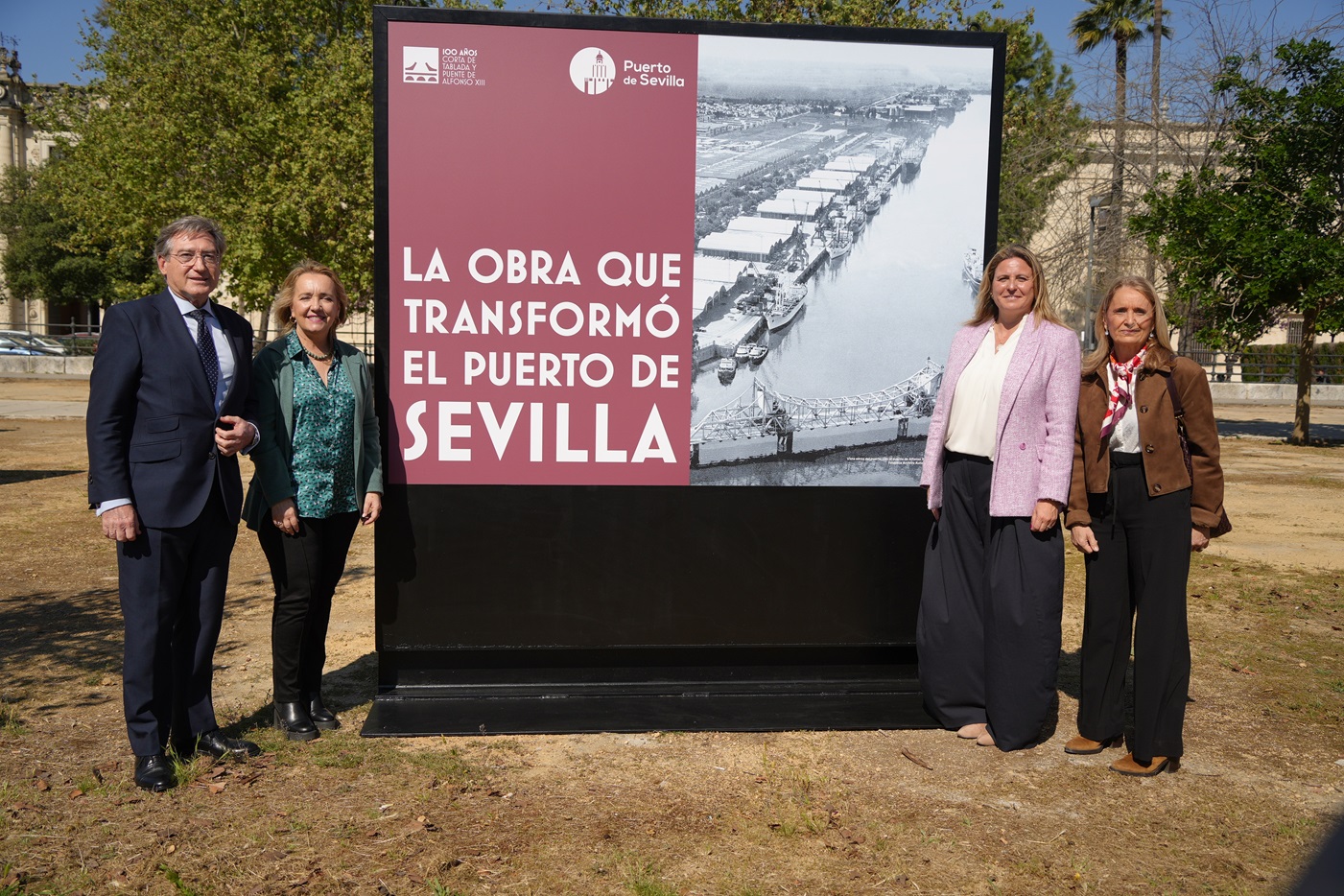
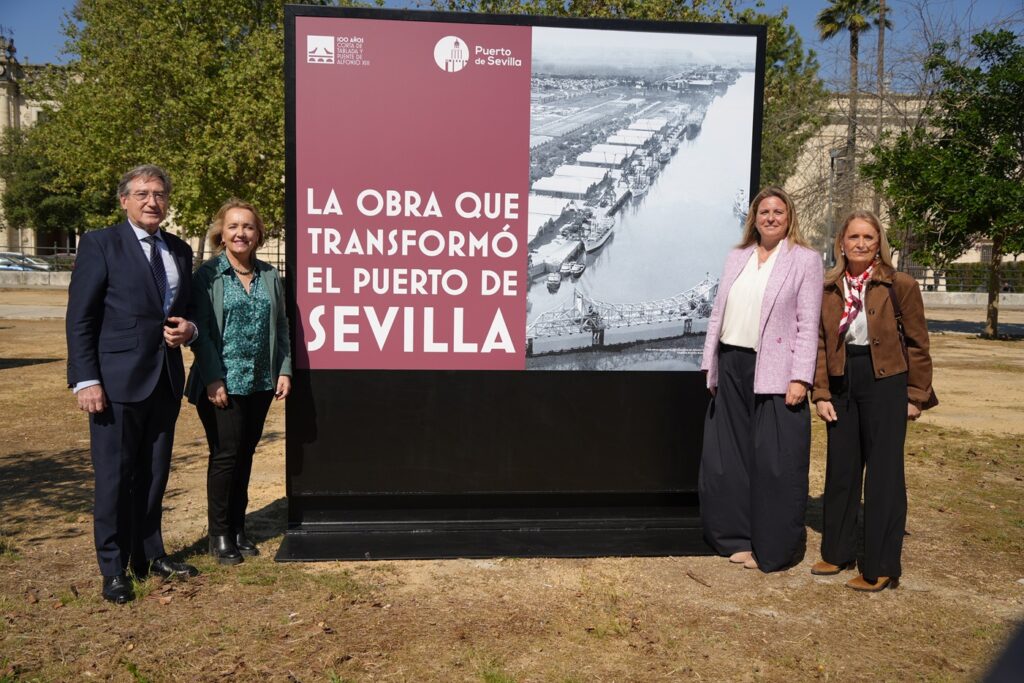
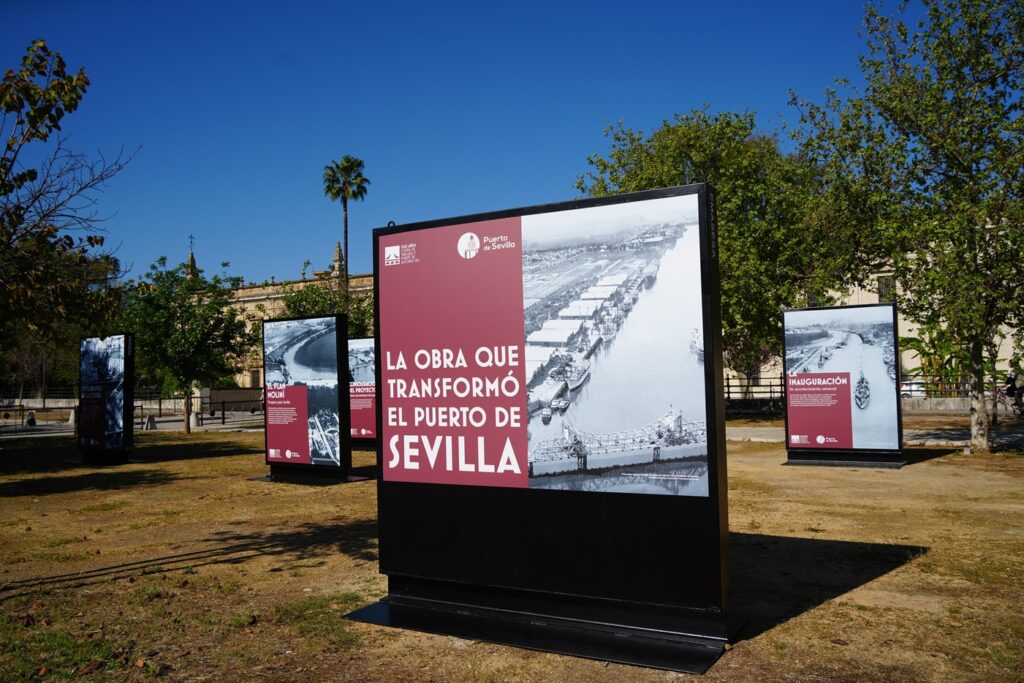
The outdoor exhibition, located next to the University of Seville on Avenida del Cid, will be open to visitors until 26 April.
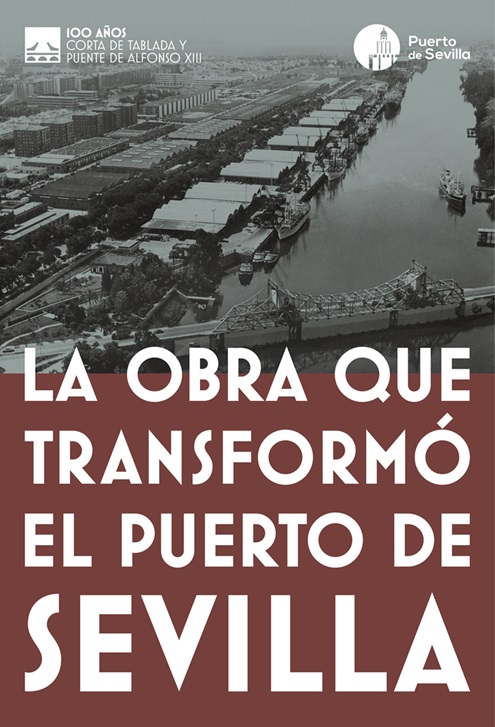
The exhibition traces the evolution of Seville’s docks through historical photographs and plans, from El Arenal to the construction of the Tablada dock and the Corta.
The President of the Port Authority of Seville, Rafael Carmona, today presented the exhibition “The Work that Transformed the Port of Seville”, marking the 100th anniversary of the inauguration of the Corta de Tablada and the Alfonso XIII Bridge—two key infrastructures in the modernisation of the port in the early 20th century.
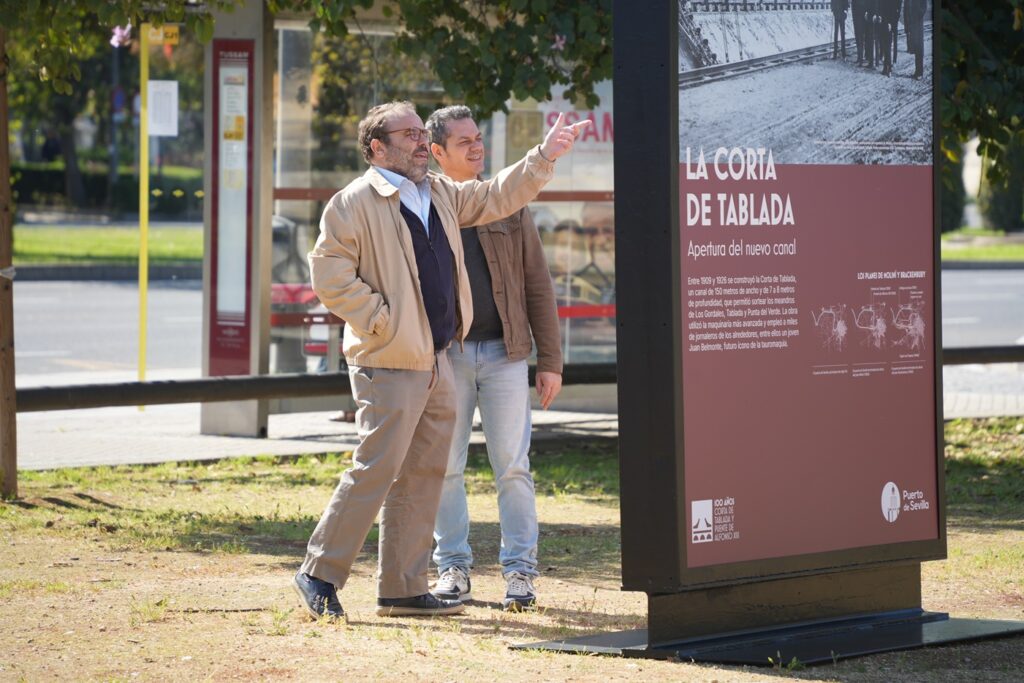
The exhibition, which will remain on display until 26 April in front of the University of Seville on Avenida del Cid, offers a journey through the port’s history and the evolution of its docks. It places particular emphasis on the Corta, the Tablada Dock, and the Alfonso XIII Bridge—projects included in the Moliní Plan and completed under the direction of Delgado de Brackenbury.
To this end, the Port Authority of Seville has designed 16 panels featuring historical maps and photographs, primarily sourced from its own Historical Archive, the Municipal Photographic Archive of Seville, the Historical Archive of the Spanish Air Force, the ABC newspaper archive, as well as private collections, among others.
These images portray Seville in the early 20th century, including rare photographs such as the now-vanished meander of Los Gordales—located near today’s fairgrounds; plans of the Las Razas warehouses designed by José Luis de Casso; construction works of the Iron Bridge and the excavation of the Corta de Tablada; and early images of El Arenal dock showing intense port activity. An aerial photograph of the inauguration day, 6 April 1926, is also preserved, when King Alfonso XIII crossed the Iron Bridge aboard the Argentine cruiser Buenos Aires.
During the presentation, the President of the Port Authority highlighted the enduring relevance of the transformative vision that drove these works a century ago. “As happened 100 years ago, we continue to promote this vision of modernity through new projects such as the Port-City Urban District, which will enable the rehabilitation and reuse of warehouses, cranes, sheds and the dock,” he stated.
“What was once a powerful hub for port activity at the beginning of the century will now become a central space for the city. It will retain port uses such as the new cruise terminal, while also becoming a hub for business attraction,” he added, announcing the arrival of a major Seville-based engineering firm and a university centre in the area.
Carmona also highlighted some unique aspects of the excavation and construction works of the Corta de Tablada, noting, for example, that the renowned bullfighter Juan Belmonte took part in the works. He also recalled that sand extracted from the Corta was reused in line with circular economy principles—being used for freight yards at Cádiz Station in San Bernardo, the Paseo de la Palmera, housing developments in El Porvenir, the Prado de Santa Justa, and to repair subsidence within the city walls.
“The Corta de Tablada was not only a project that modernised the Port of Seville, but also accelerated the transformation of the city ahead of the Ibero-American Exposition of 1929,” the President noted, highlighting the work of engineers and directors of the Port Works Board, Moliní and Brackenbury.
Also attending the presentation were the Deputy Minister of Culture and Sport of the Andalusian Government, Macarena O’Neill; the City Council’s Delegate for Tourism and Culture, Ángeles Moreno; the Vice-Rector for Strategic and Economic Planning at the University of Seville, Carmen Barroso; the provincial representative in Seville of the Association of Civil Engineers, Pietro Tucci; and the Commissioner for the centenary of the 1929 Exposition, Julio Cuesta.
[/fusion_text][/fusion_builder_column][/fusion_builder_row][/fusion_builder_container]