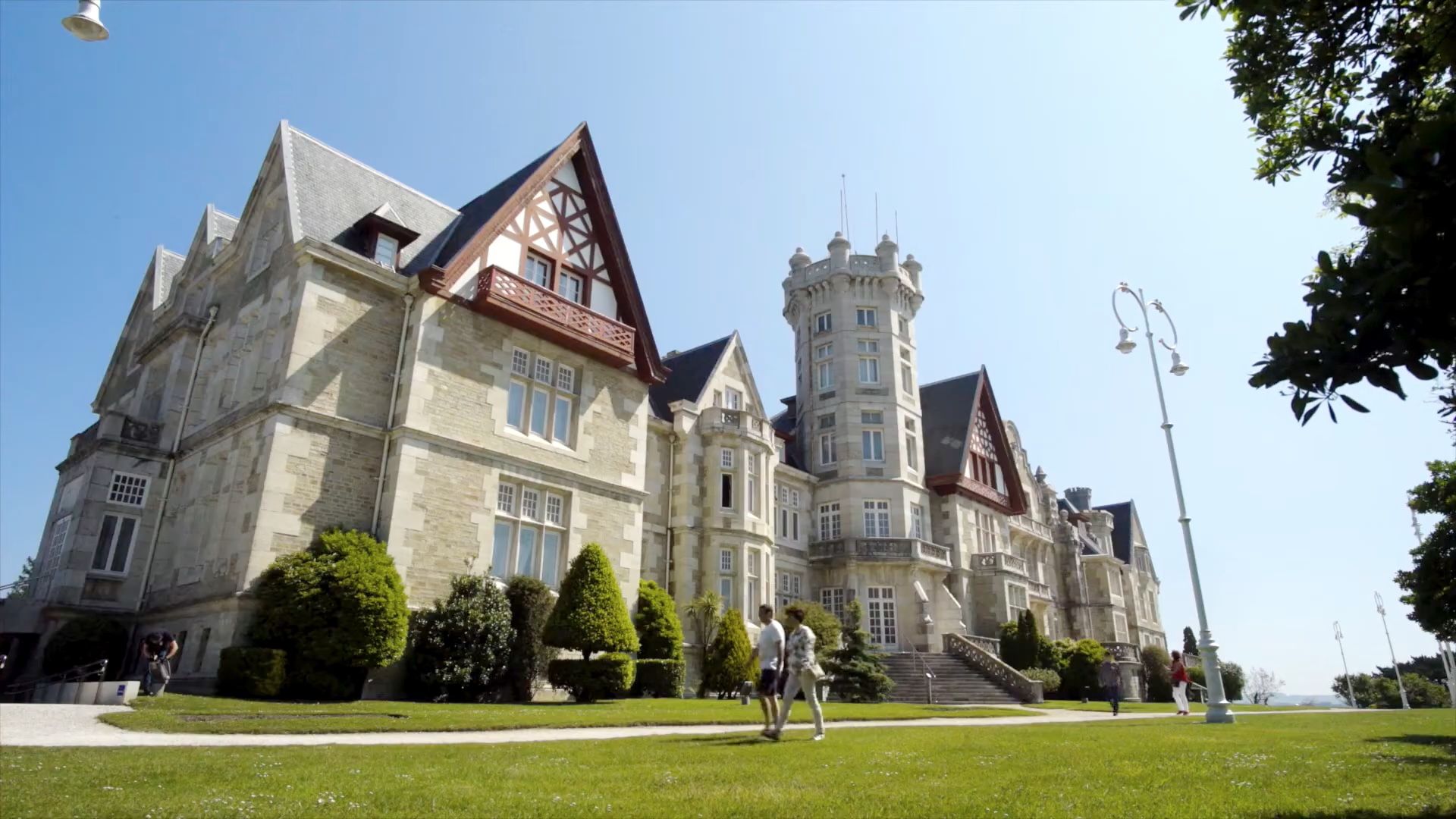
Teófila Martínez will lead an international session at the Palacio de la Magdalena on 8 September, focusing on new models of cooperation between ports and cities and the regeneration of waterfronts
Experts and port representatives from Spain, Portugal, Argentina, Brazil, Chile and Peru will analyse the main challenges facing port cities and present experiences from Buenos Aires, A Coruña, Lisbon, Leixões, Santos, Chancay and Santander
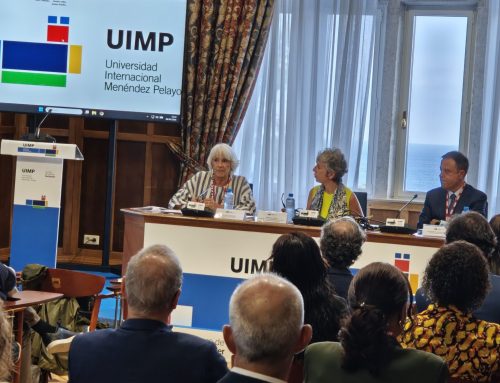
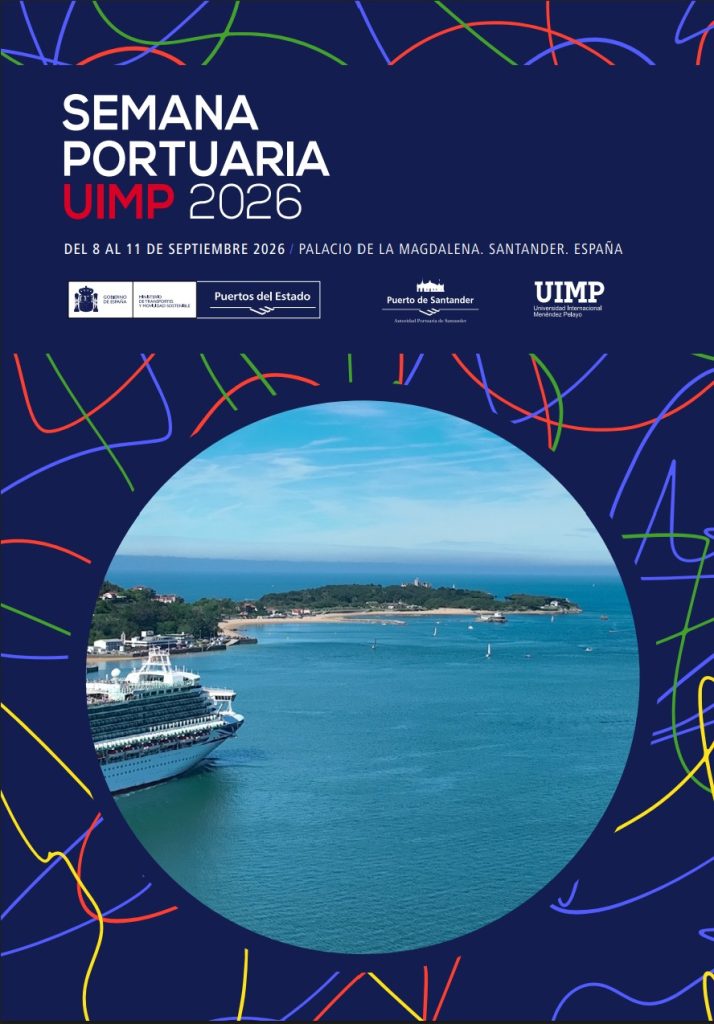
RETE, the International Association for Collaboration between Ports and Cities, will once again play a prominent role in the Port Week organised by the Menéndez Pelayo International University, which will take place from 8 to 11 September 2026 at the Palacio de la Magdalena in Santander.
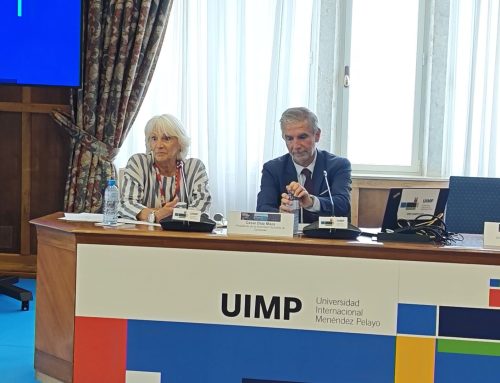
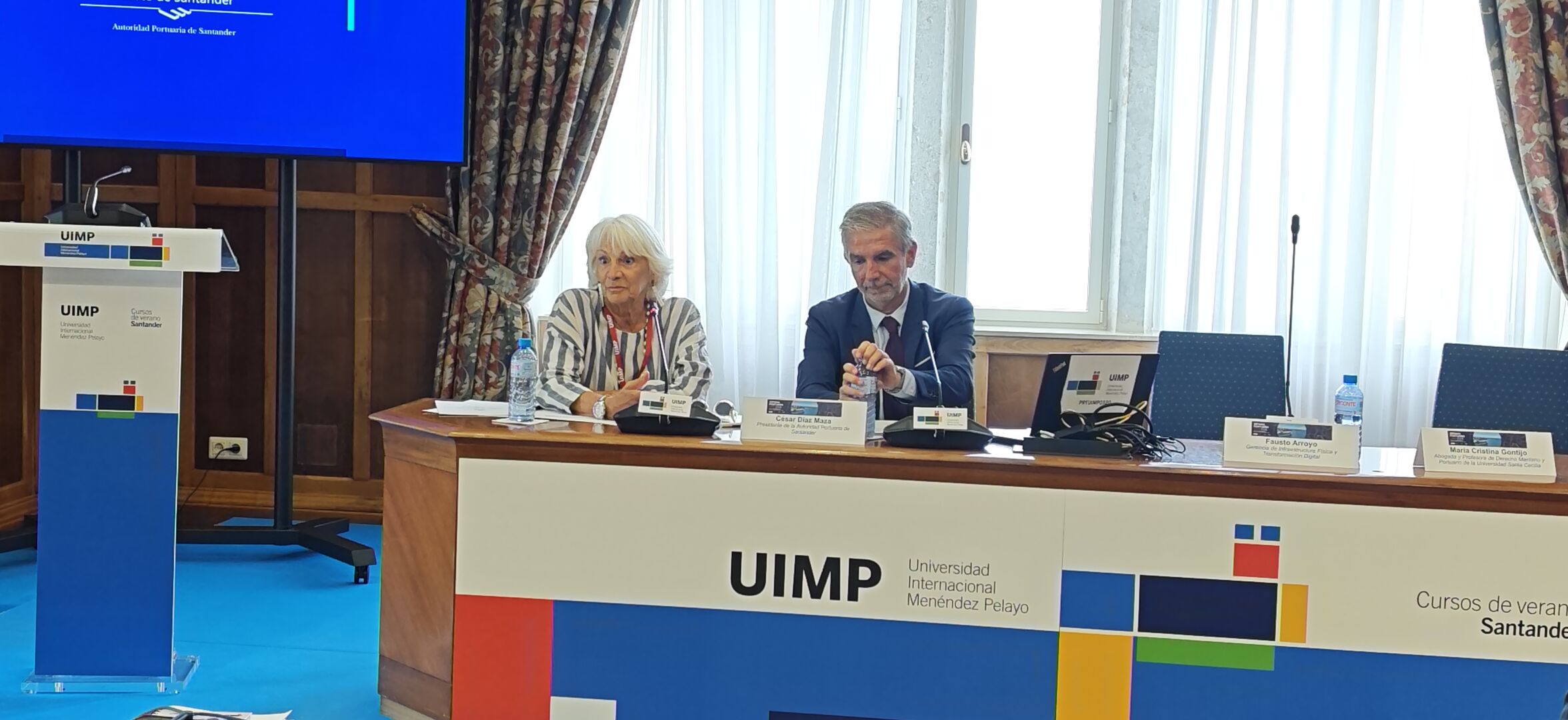
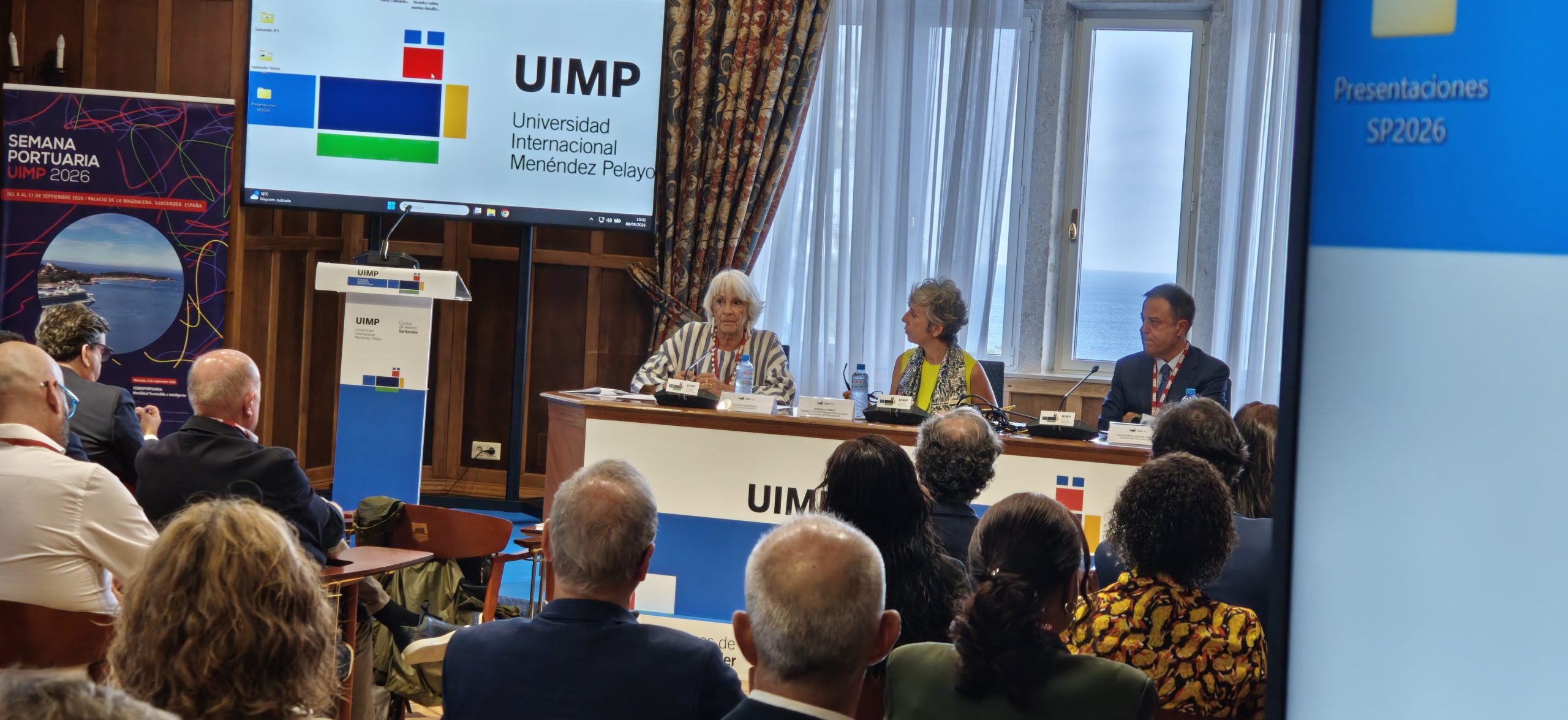
The President of RETE and President of the Port Authority of the Bay of Cadiz, Teófila Martínez Saiz, will co-direct the opening session on Tuesday, 8 September, entitled “The Ibero-American Port City: New Horizons in Port-City Relations and Waterfront Regeneration”, alongside the President of the Port Authority of Santander, César Díaz Maza.
The event’s secretary will be Francisco Javier Álvarez García, Head of the General Administration and Legal Services Department at the Port Authority of Santander. The session will bring together experts, academics and port representatives from different Ibero-American countries to identify the current challenges facing port-city relations and examine projects involving the transformation of port and waterfront areas.
UIMP Port Week is organised by the Port Authority of Santander, the Menéndez Pelayo International University and Puertos del Estado as a summer school designed to provide training aligned with the priorities of the sector and to foster a culture of continuous learning. It is aimed at executives and professionals working in the port and logistics sector, as well as researchers, lecturers and students interested in developing their careers in this field.
An Ibero-American perspective on the transformation of port cities
The session led by Teófila Martínez takes as its starting point the profound transformation currently being experienced by port cities as a result of the digital revolution, the transition towards more sustainable models of behaviour and the emergence of new economic, social, environmental and territorial challenges.
These processes are changing both the way ports and urban centres operate and the forms of interaction between them. The event aims to provide a comparative analysis of these transformations in Ibero-American port cities, considering both their shared characteristics and the institutional, economic and urban particularities of each territory.
Its second major objective will be to help inspire a new generation of public policies and governance models capable of strengthening coexistence and cooperation between ports and cities, improving territorial resilience, promoting competitiveness and enhancing people’s quality of life.
Teófila Martínez stressed that “port-city relations can no longer be understood as a sector-specific issue or as an exclusively urban-planning matter. They constitute a territorial policy that requires shared governance, long-term planning and the ability to turn the areas where ports and cities meet into spaces of opportunity, cohesion, innovation and quality of life.”
“This session will allow us to compare very different realities in Europe and Latin America, learn about specific projects and make progress in defining common principles for a new generation of waterfronts that are more sustainable, accessible and integrated into the life of their cities,” added the President of RETE.
The Association’s participation continues the work carried out during previous editions of Port Week. In 2023, RETE led the event on smart port cities and technological cooperation, while in 2024 it coordinated the session “Ports Committed to Their Cities”, also under the direction of Teófila Martínez.
Challenges and experiences in port-city relations
Following the reception and registration of participants, scheduled from 9:00 a.m., the session will begin at 9:30 a.m. with the opening ceremony and welcome addresses by institutional representatives.
The first block, entitled “Port-City Relations in Ibero-America: Current Challenges and Inspiring Experiences”, will provide a territorial and comparative overview of the current situation in Portugal, Latin America and Spain.
The Portuguese perspective will be presented by João Figueira de Sousa, Professor in the Department of Geography and Regional Planning at NOVA University Lisbon. His contribution will address Portugal’s experience in port planning, spatial planning and the relationship between port infrastructure and urban areas.
He will be followed by Octavio Doerr, a consultant at Port Research & Consulting, who will examine the situation of Latin American port cities and the principal challenges facing their governance, planning and development systems. Doerr has extensive experience in analysing port policies and port-city relations in Latin America.
The Spanish perspective will be presented by Álvaro Rodríguez Dapena, Deputy Director of Strategy and Business Development at Puertos del Estado, who will analyse the policies and strategic priorities associated with the commitment of Spanish ports to their cities.
The three presentations will be followed by a discussion comparing the different institutional and territorial realities and addressing issues such as shared governance, urban planning, the generation of social value, environmental sustainability and the recovery of port areas for new uses.
A new generation of Ibero-American waterfronts
The second block, “Waterfront Revisited: The New Generation of Port and Maritime Waterfronts in Ibero-America”, will focus on specific projects involving urban regeneration and the transformation of port areas.
The first experience will be that of Buenos Aires, presented by Marcelo Teper, Director of the National Port Training Centre at Argentina’s National Ports and Navigation Agency. His presentation will examine the transformation of port areas in the Argentine capital and the challenges involved in reconciling logistics activities, urban development and public uses.
The case of A Coruña will be presented by Martín Fernández, President of the Port Authority of A Coruña. His contribution will address the transformation of the city’s port waterfront and the opportunities offered by recovering and reorganising these areas to redefine the relationship between the port and the city.
The Portuguese experience of Lisbon and Leixões will be presented by architect Nuno Viterbo da Cunha Abrunhosa e Sousa, a member of the Board of Directors of the ports of Lisbon and Setúbal. His contribution will provide an insight into the evolution of Portuguese waterfronts and the approaches adopted to make port activity, mobility, heritage, public space and new urban developments compatible.
Brazil will be represented by Maria Cristina Gontijo, Professor of Maritime, Port, Environmental and Regulatory Law on the Fundamentals of Logistics, Infrastructure and Port Environment programme at the Santos Port Centre of Excellence. She will present the case of Santos, one of Latin America’s leading port systems, and the regulatory, environmental and territorial challenges arising from its relationship with the city.
The Chancay project in Peru will be analysed by Fausto Arroyo, representing the Physical Infrastructure and Digital Transformation Department of the Development Bank of Latin America and the Caribbean, CAF. His contribution will examine the territorial and urban impact of major emerging port infrastructures and the need to incorporate port-city planning from the earliest stages of their development.
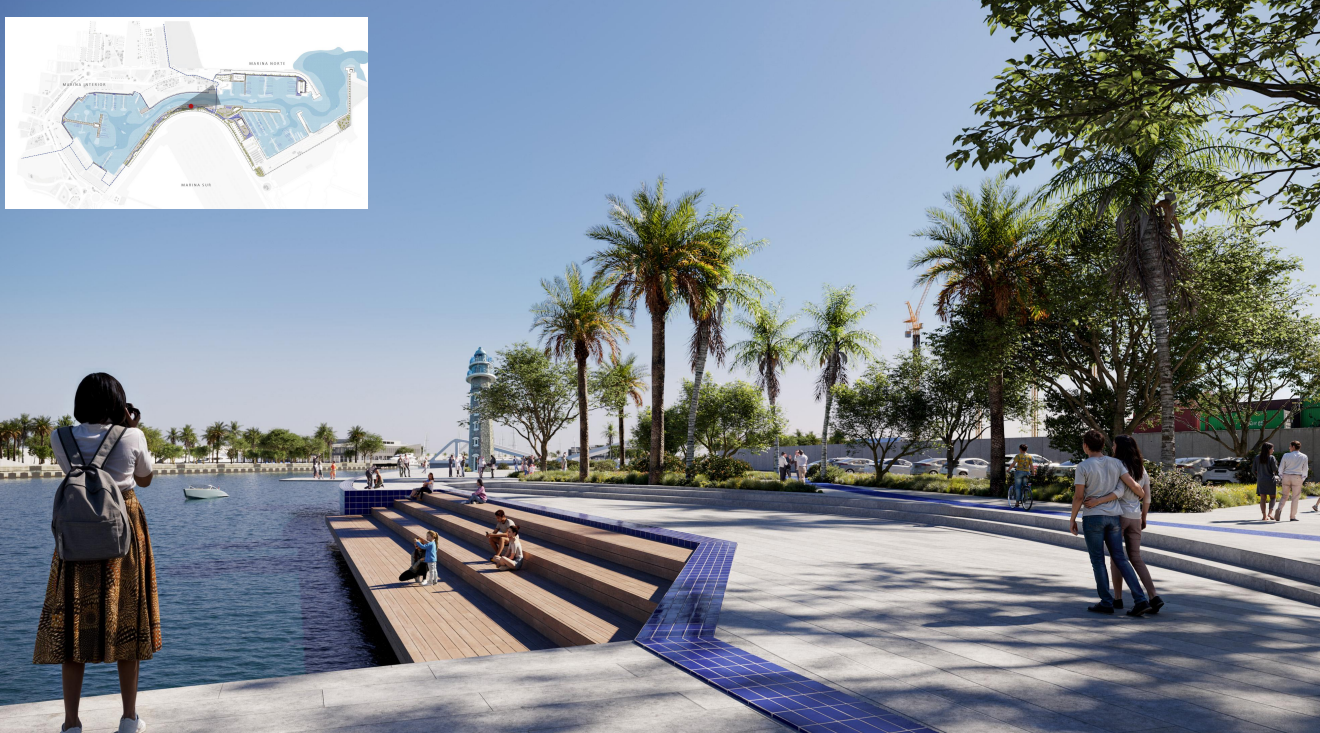
Finally, César Díaz Maza, President of the Port Authority of Santander, will present the experience of Santander, a city that has implemented several projects in recent years to recover, transform and open port areas for public use.
The block will conclude with a discussion on the principles for the sustainable development of urban waterfront areas, seeking to identify criteria applicable to future projects, including shared governance, territorial integration, sustainability, accessibility, public participation, the creation of economic value and the preservation of port identity.
The session will close between 1:50 and 2:00 p.m. with the presentation of its principal conclusions and contributions from institutional representatives.
Sustainable rail and port mobility
Port Week will continue on Wednesday, 9 September, with the event “Ferroport: Sustainable and Smart Mobility”, directed by Álvaro Rodríguez Dapena, Deputy Director of Strategy and Business Development at Puertos del Estado, and Antonio Aguilar Mediavilla, Deputy Director for the Promotion of Rail Freight Transport at ADIF.
The secretary of the session will be Christian Manrique Valdor, Head of Infrastructure and Public Domain at the Port Authority of Santander.
The event will analyse the policies and objectives driving the transition towards cleaner, more efficient and smarter rail and port mobility. It will also examine intermodality and rail motorways as instruments for developing coordinated, resilient and low-carbon logistics chains.
The first block, devoted to ports as key nodes for maritime-rail mobility, will include contributions from:
- Álvaro Rodríguez Dapena, who will examine the past, present and future of maritime-rail freight mobility.
- José Antonio Sebastián Ruiz, Government Commissioner for the Atlantic Corridor at the Ministry of Transport and Sustainable Mobility, who will analyse the promotion of port-rail connectivity within the framework of the Trans-European Transport Network.
- Eduardo San Román Montero, Director-General of the Logistics Agency of the Community of Madrid, who will present the region’s logistics strategy and railway corridors.
The second block will focus on port-rail complexes and cooperation between ADIF and the port system. Participants will include:
- Luis Vicente Moreno Espí, Director of Logistics Services at ADIF.
- Juan José Aguilar Pacheco, Head of Operations and Intermodality at the Port Authority of the Bay of Algeciras.
- Ángel Pulido Hernández, Director of the Port Authority of Seville.
- Christian Manrique Valdor, Head of Infrastructure and Public Domain at the Port Authority of Santander.
The final part of the session will be devoted to the development of rail motorways in Spain. Antonio Aguilar Mediavilla will present ADIF’s strategy, followed by an examination of the cases of Valencia and Santander.
The Valencia experience will feature Mar Chao López, President of the Port Authority of Valencia; Juan Carlos Arocas Bordanova, Director of Transitalia; and Jesús Calvo Delgado, Director of Tramesa.
The Santander case will be presented by César Díaz Maza, President of the Port Authority of Santander, and Santiago Díaz Fraile, Director of the Port Authority.
Ports in the new global geostrategic landscape
On Thursday, 10 September, Port Week will address the growing geopolitical dimension of port infrastructure during the session “Ports in the Emerging Geostrategic Landscape: Trade, Defence and Security.”
The event will be directed by Alberto Camarero Orivé, Professor in the Department of Civil Engineering, Transport and Territory at the Technical University of Madrid, and Abel Romero Junquera, a Spanish Navy Captain and senior analyst at the Spanish Institute for Strategic Studies.
The secretary will be María Cuesta Sainz, Head of the Planning Division at the Port Authority of Santander.
The session will analyse the dual nature of ports: on the one hand, as logistics centres that are essential to international trade and connectivity and, on the other, as critical infrastructure for defence, security and the strategic projection of territories. The event will also include the presentation of the book “National Defence and Spanish State Ports”, the result of a joint reflection process involving Puertos del Estado and the Spanish Armed Forces.
The first block, focusing on the role of ports in global maritime geopolitics, will include:
- Miguel Ballenilla y García de Gamarra, Lieutenant General and Director of the Spanish Higher Centre for National Defence Studies, CESEDEN, who will analyse the evolution of global geostrategy and its influence on ports.
- Álvaro Rodríguez Dapena, who will address dual civil-military mobility within the European Union.
The second block will examine the risks affecting maritime transport, the vulnerability of global supply chains and their impact on ports. Speakers will include:
- José Ignacio García Murillo, Supply Chain Director at Renault Iberia, who will analyse the major maritime bottlenecks or chokepoints.
- Elías García Gutiérrez, Senior Advisor at COSCO SHIPPING Ports, who will address the threats and vulnerabilities affecting port infrastructure.
- Javier Marín Calderón, Head of Landside for South-West Europe and the Maghreb at Maersk, who will examine the vulnerability of the world’s principal maritime transport routes.
The third block will focus specifically on national defence and Spanish State ports. Participants will include:
- Abel Romero Junquera, with a contribution on the maritime dimension as an essential factor in geopolitics.
- Tomás García Figueras, a Spanish Navy Captain and Naval Commander of Bilbao, who will analyse the strategic priorities for defence and maritime cooperation in Spain.
- Álvaro Rodríguez Dapena, who will explain the importance of the Spanish port system for national defence.
A Leadership School to close the programme
Port Week will conclude on Friday, 11 September, with the “Leadership School: A New Management Model for Ports and Port Authorities”, directed by César Díaz Maza and Clara La Calle López-Gay, Secretary-General of Puertos del Estado.
The session will reflect on the need to review organisational models and management systems that are more than three decades old in order to build port authorities that are more agile, innovative and adaptable.
The first block, “Management in the Digital Age: New Paradigms”, will include contributions from:
- Concepción López Fernández, Professor of Business Organisation and Rector of the University of Cantabria.
- Javier Sánchez Lamelas, founder and CEO of Top Line Marketing Consulting and former Global Vice-President of Marketing at Coca-Cola.
- Miguel Ballenilla y García de Gamarra, Director of CESEDEN.
- Clara La Calle López-Gay, Secretary-General of Puertos del Estado.
This will be followed by a discussion on reinventing port management, moderated by César Díaz Maza and involving both the speakers and members of the audience.
Registration and academic recognition
Registration is managed through the Student Secretariat of the Menéndez Pelayo International University, based at the Palacio de la Magdalena, or through the UIMP’s online enrolment procedure.
La inscripción se gestiona a través de la Secretaría de Alumnos de la Universidad Internacional Menéndez Pelayo, con sede en el Palacio de la Magdalena, o mediante el procedimiento de matrícula en línea de la UIMP.