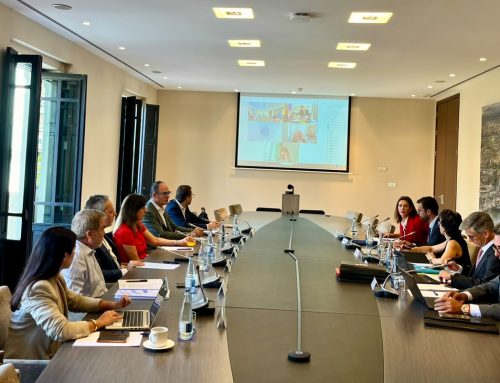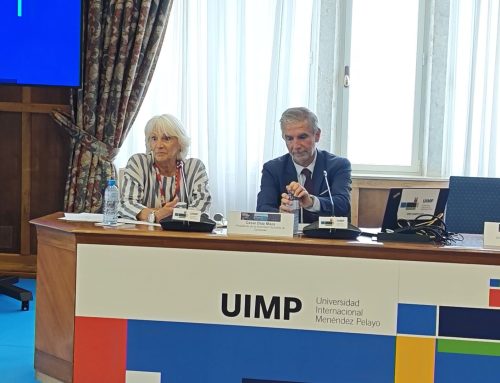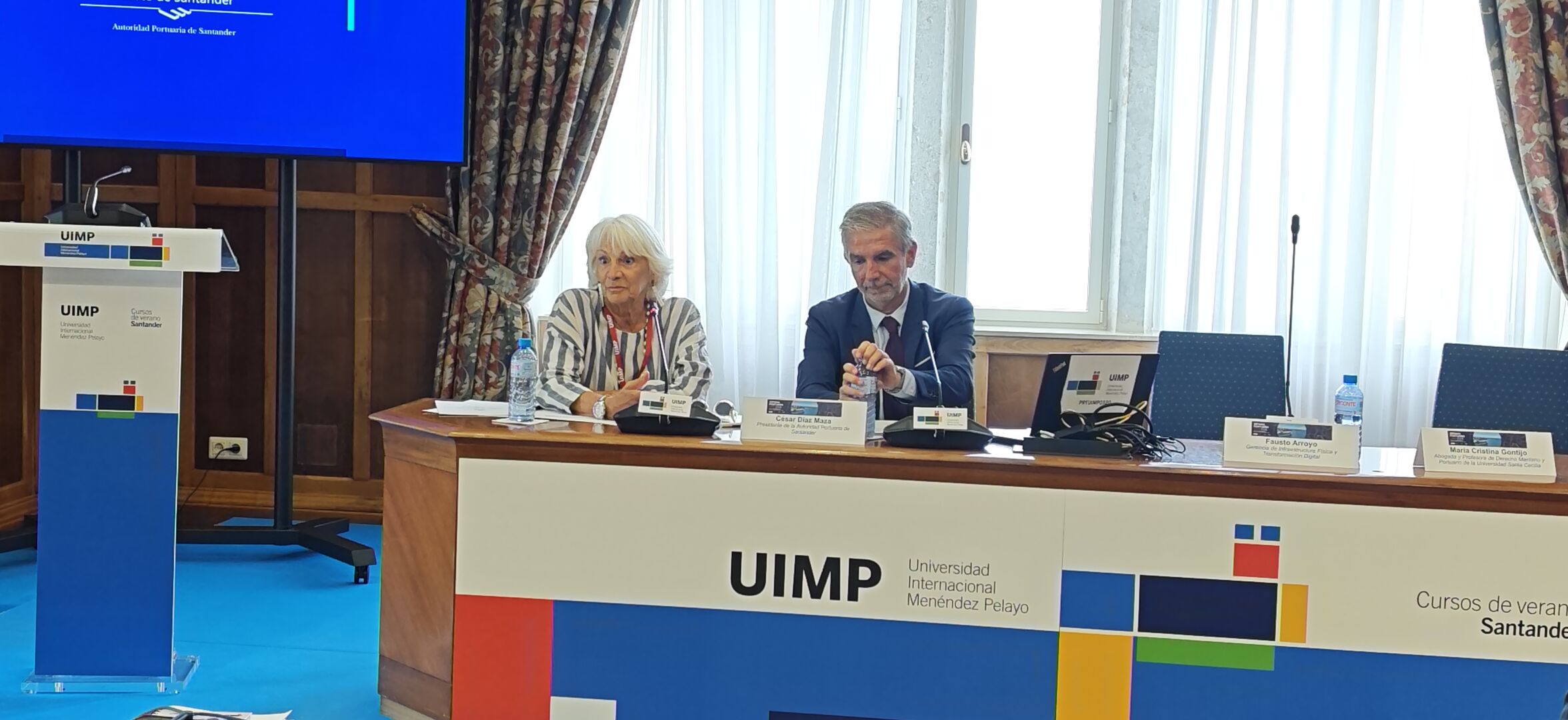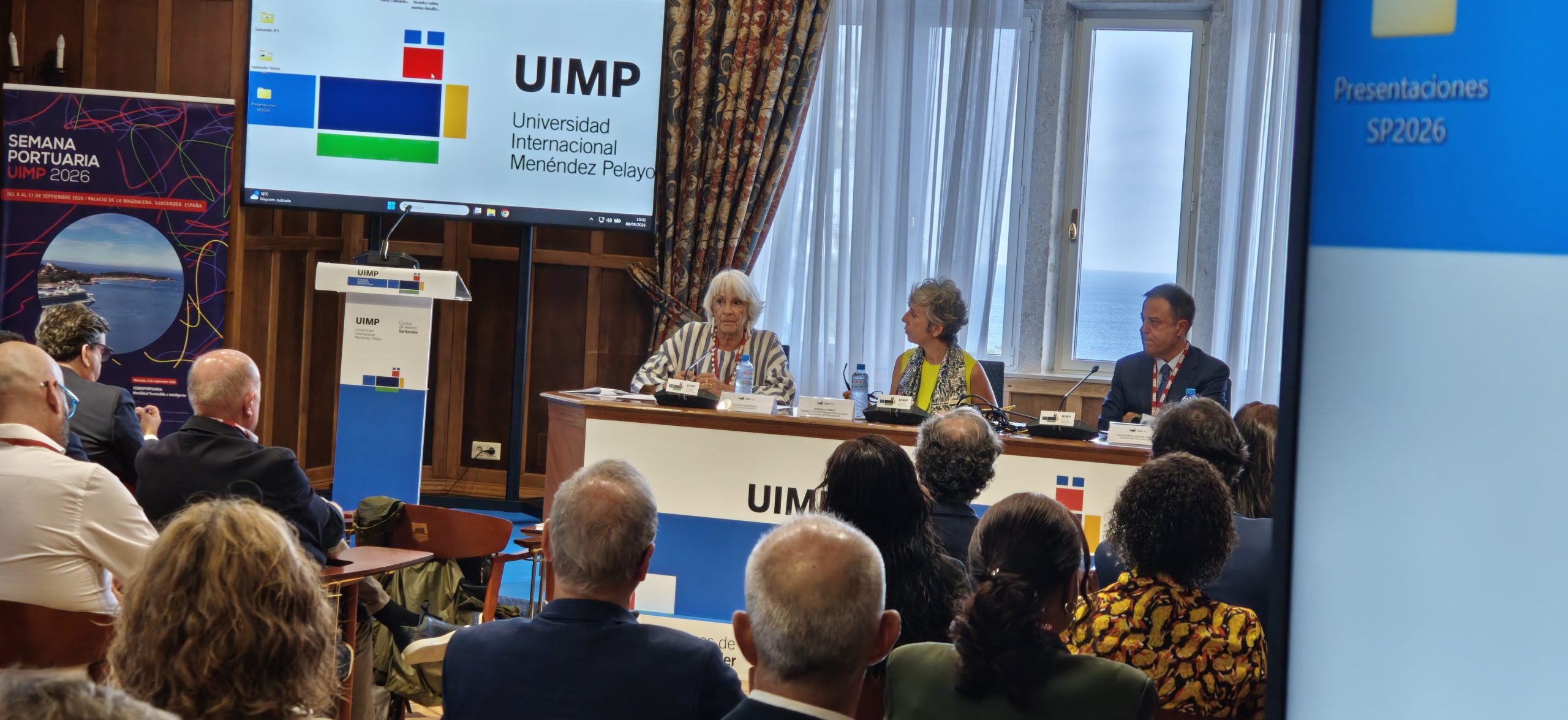
President Teófila Martínez takes part in the opening of UIMP Port Week 2026, whose first session, devoted to the Ibero-American port city, she co-directs together with the President of the Port Authority of Santander, César Díaz
The President of RETE, the International Association for Collaboration between Ports and Cities, and President of the Port Authority of the Bay of Cádiz, Teófila Martínez Saiz, today called in Santander for progress towards a broader concept of port-city integration that goes beyond the traditional urban planning perspective and fully incorporates its economic, social, cultural, environmental and territorial dimensions.
Martínez made these remarks during her intervention at the opening of the first session of UIMP Port Week 2026, which is being held at the Palacio de la Magdalena in Santander until 11 September. The opening session is entitled “The Ibero-American Port City: New Horizons in Port-City Relations and Waterfront Regeneration” and is jointly directed by the President of RETE and the President of the Port Authority of Santander, César Díaz Maza.
The President of RETE stressed that integration processes cannot be limited to the occasional transfer or transformation of spaces that have lost their former port function, but must instead form part of a genuine shared strategy involving the port, the city and the surrounding territory.
“Port-city integration goes beyond urban planning, the distribution of land and its use; it has a much broader dimension, encompassing economic, social and cultural aspects,” Martínez said.
In this regard, she warned that the physical transformation of a waterfront has little real meaning unless it succeeds in generating activity, coexistence and value for society. In her view, if these conditions are not achieved “successfully”, there is a risk that such spaces will remain residual areas of the city rather than becoming fully integrated into its development.
Teófila Martínez placed particular emphasis on the role that RETE has been playing as an international platform for the exchange of experiences between cities and ports. Recalling that the name RETE itself means “network” in Italian, its President noted that one of the organisation’s main strengths is precisely its ability to share experiences, learn from initiatives undertaken in other port cities and distinguish between practices that have delivered positive results and those that need to be reconsidered.
“We have moved from looking at what concerns the port city and the port itself to also thinking, from the port’s perspective, about the wider territory,” she explained.
Martínez drew attention to the impact that major port infrastructure and connectivity have not only on the cities in which ports are located, but also on their metropolitan areas and surrounding territories. Among the issues that, in her view, must form part of this new approach are mobility and the landside connectivity of ports, their effects on urban and metropolitan areas, the coexistence of different uses, sustainability and the rational use of land.
Another issue highlighted by Teófila Martínez was the need to adapt administrative procedures and regulatory frameworks to the complexity of port-city integration projects. The President of RETE recalled that these projects require lengthy periods of planning, processing and management and advocated the development of more agile instruments.
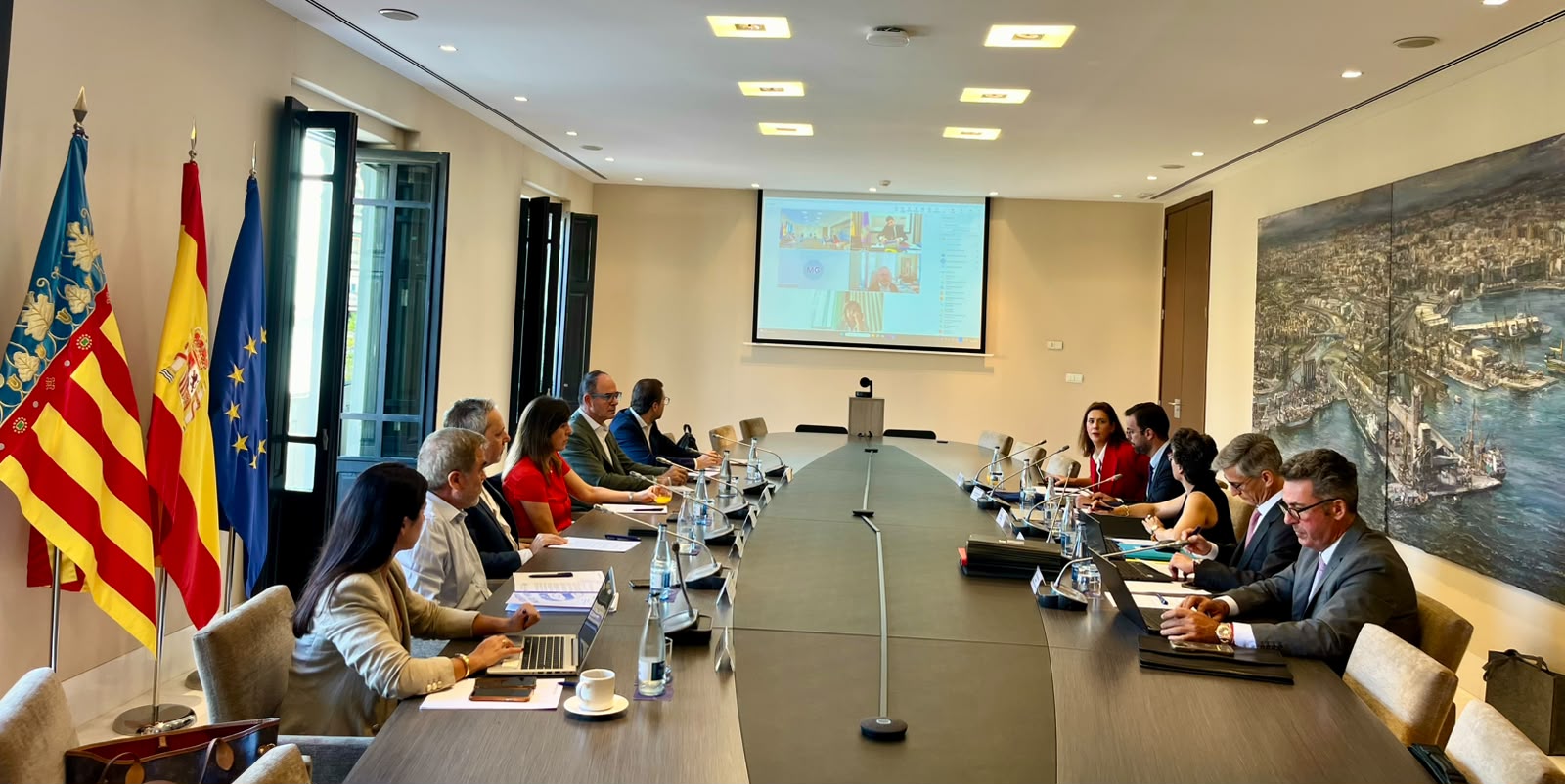
The meeting co-directed by RETE is based on the premise that port cities are undergoing a process of profound reinvention, driven by the digital revolution, sustainability and other major global and local transformations.
Today’s academic programme has been structured around two main blocks.
The first block, “Port-City Relations in Ibero-America: Current Challenges and Inspiring Experiences”, offered three complementary perspectives on the evolution of these relationships. João Figueira de Sousa, Professor at the Department of Geography and Regional Planning at NOVA University Lisbon, addressed the Portuguese experience; Octavio Doerr, from Port Research & Consulting, provided the Latin American perspective; while the Spanish perspective was presented by Álvaro Rodríguez Dapena, Deputy Director for Strategy and Business Development at Puertos del Estado.
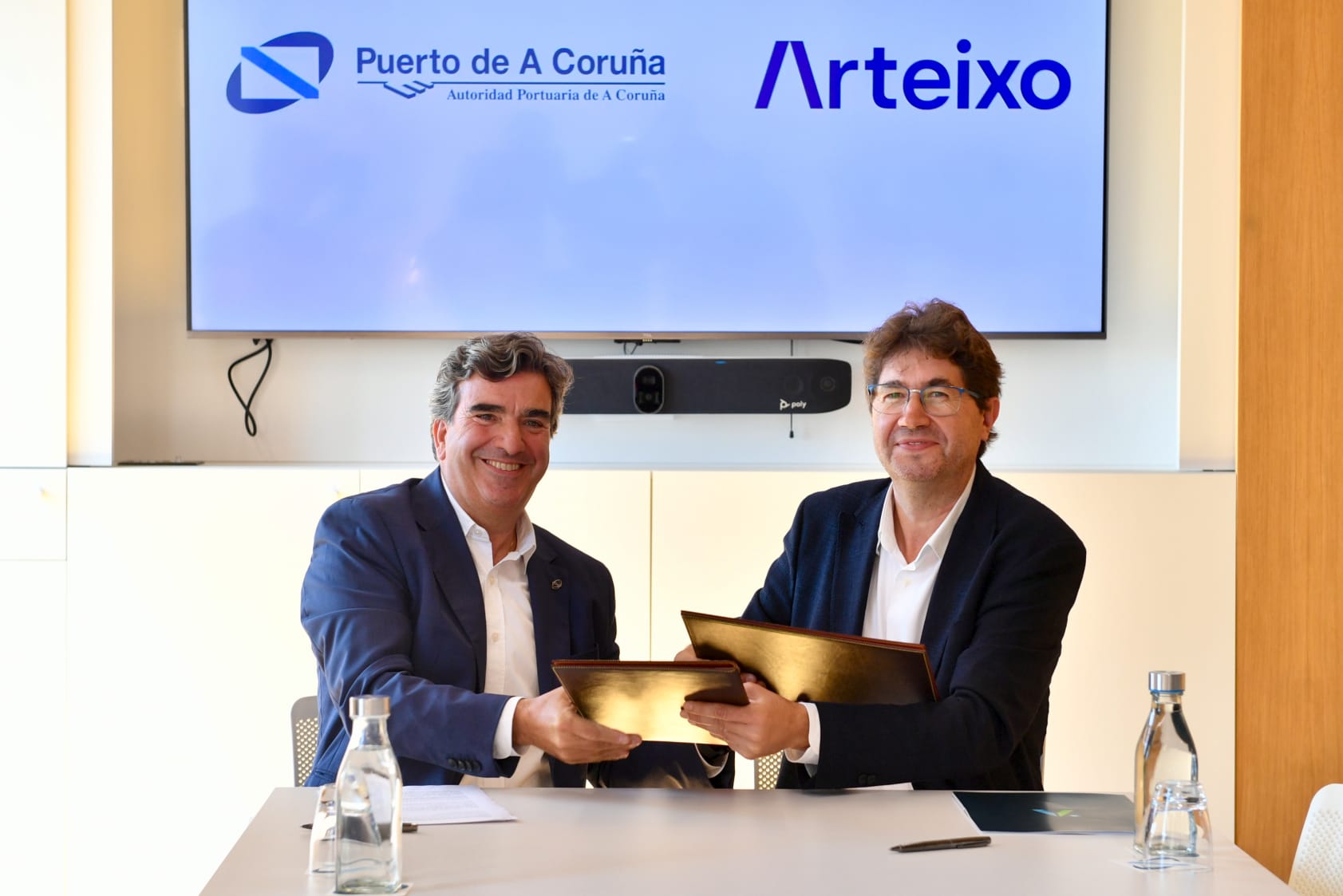
The second main block, “Waterfront Revisited: The New Generation of Maritime-Port Fronts in Ibero-America”, examined a series of specific case studies. The first, Buenos Aires, was presented by Marcelo Teper, Director of the National Port Training Centre of Argentina’s National Ports and Navigation Agency (ANPYN). Martín Fernández Prado, President of the Port Authority of A Coruña, presented the case of A Coruña and the transformation process of its waterfront.
Architect Nuno Viterbo da Cunha Abrunhosa e Sousa, member of the Board of Directors of the ports of Lisbon, presented the Portuguese experience of Lisbon and Leixões. The Brazilian city of Santos was represented by Maria Cristina Gontijo, Professor of Maritime, Port, Environmental and Regulatory Law at the Santos Port Centre of Excellence.
Fausto Arroyo, from the Physical Infrastructure and Digital Transformation Department of the Development Bank of Latin America and the Caribbean —CAF—, analysed the case of the new Chancay port complex in Peru. Finally, the Santander experience was presented by the President of its Port Authority, César Díaz Maza.
[/fusion_text][/fusion_builder_column][/fusion_builder_row][/fusion_builder_container]