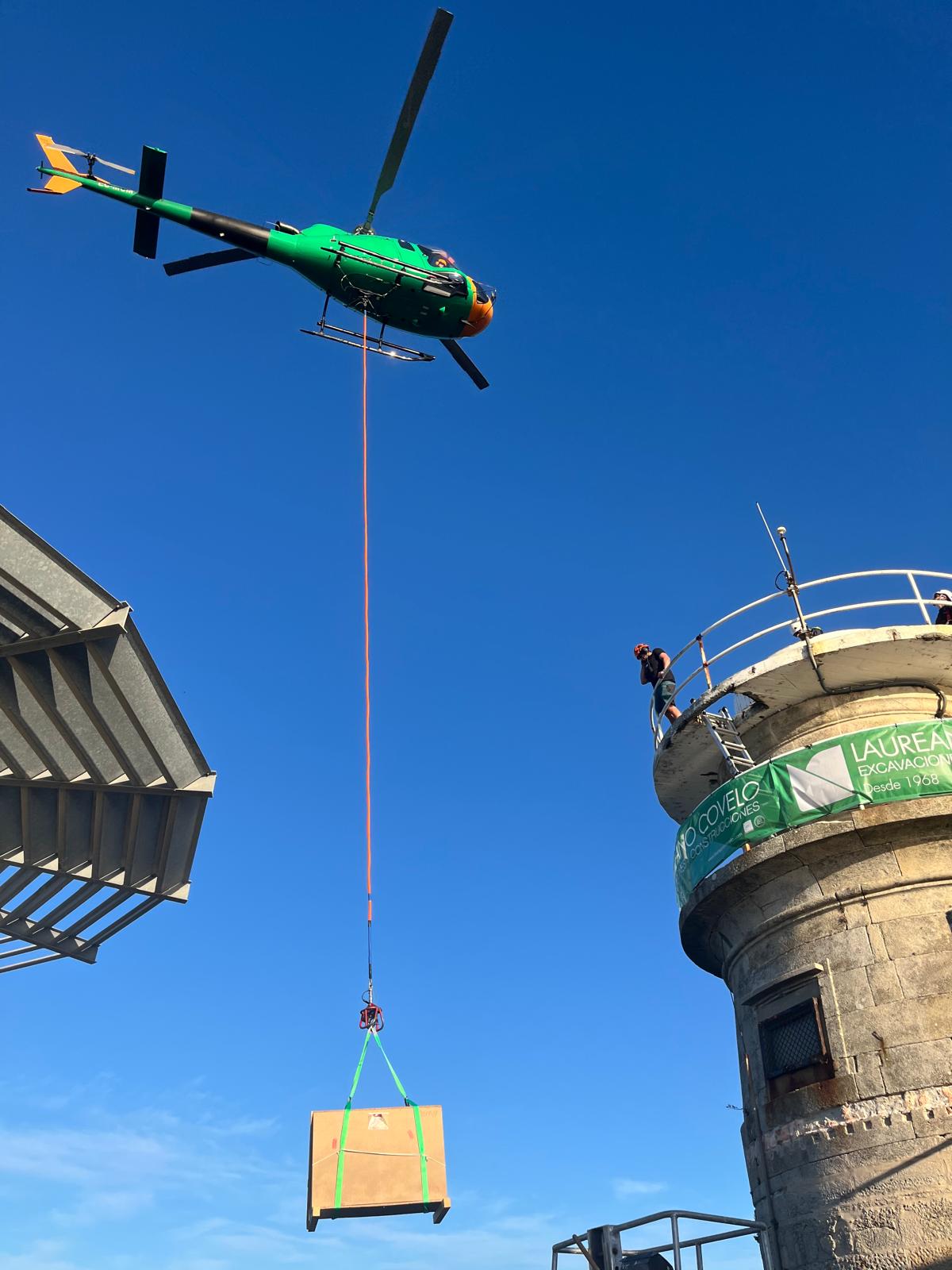
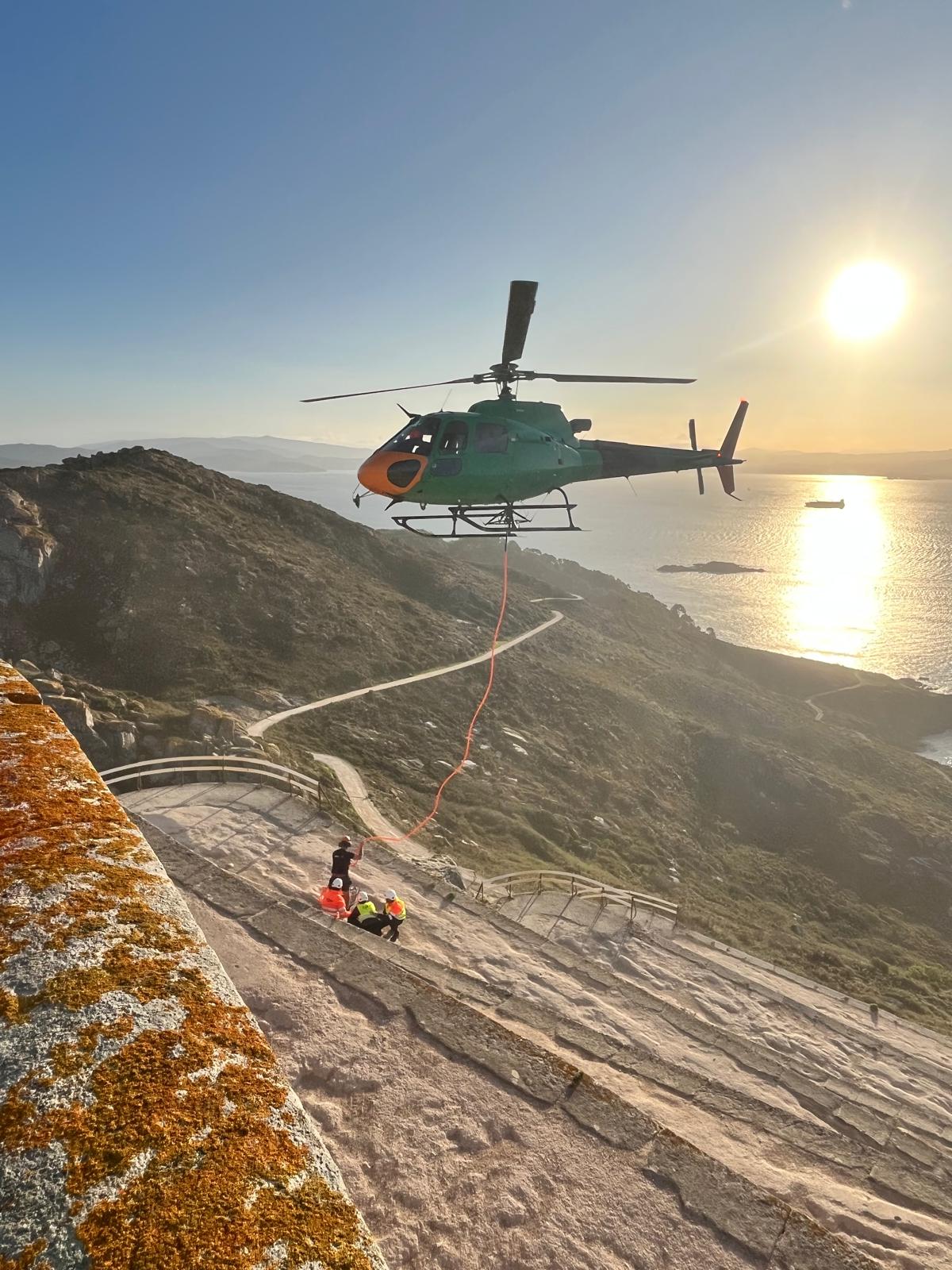
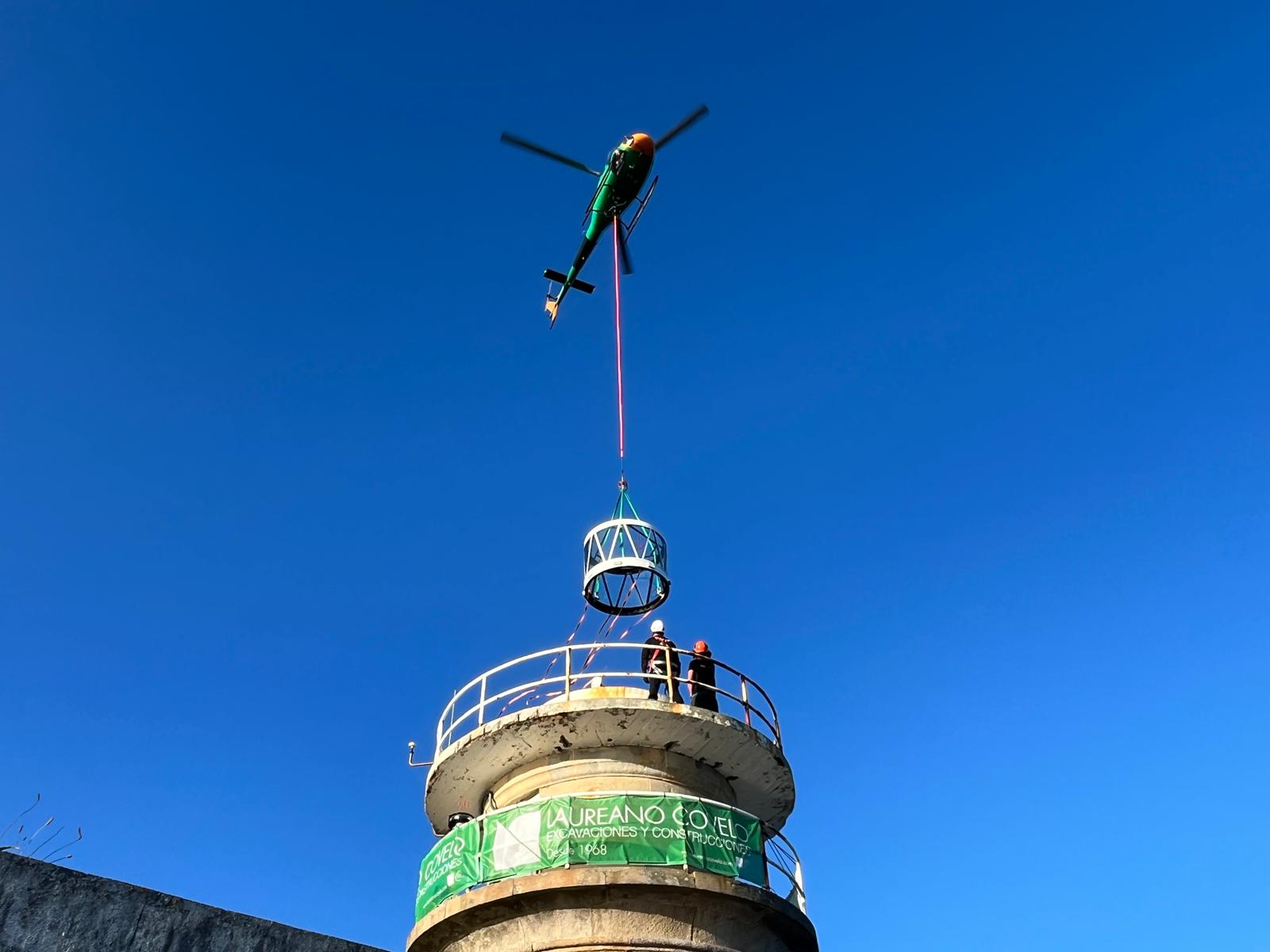
It is not every day that you see the top of a lighthouse flying through the air. Since early this morning, the iconic Cíes Islands Lighthouse has been the setting for a delicate and spectacular operation of considerable technical complexity, which will culminate in the installation of a new lantern transported in sections by helicopter.
After travelling by boat from Bouzas to the Carracido quay on Tuesday, the two main components of the lighthouse lantern began the final stage of their journey through the air. In a highly precise operation producing striking images over the Vigo estuary, a specialist helicopter is lifting the components one by one to the top of the lighthouse. Among them are the 1,000-kilogram glazed lantern body and the large 1,500-kilogram upper metal dome. Once at the top, the technical teams will work closely together to fit and assemble each component in its final position.
Through this project, in which the Port Authority of Vigo (APV) has invested more than €300,000, the historic lighthouse will overcome the effects of years of wear caused by the harsh marine environment.
The works are being carried out by Excavaciones y Construcciones Laureano Covelo, S.A., working alongside Mediterráneo Señales Marítimas, S.L., the specialist company responsible for coordinating the installation of the lantern. The transport and lifting operation is being carried out with the participation of Helitrans Pyrinees, S.L., which is responsible for the helicopter operations.
The entire operation is being supervised at all times by staff from the APV’s Infrastructure Area, the Works and Blue Economy Department and the Ecological Transition and Sustainability Division, with the Maritime Signals team leading the operation.
Clean energy to keep lighting up the estuary
Taking advantage of this major refurbishment, the Port of Vigo has taken another step forward in its commitment to the Cíes Islands by installing a new photovoltaic energy system.
Thanks to the improvements to the roof, together with the new solar panels and batteries, the lighthouse will gain greater energy autonomy and reduce its emissions, using solar power to keep its light shining every night while ensuring maximum respect for this outstanding natural environment.
However, this refurbishment is only the first step in the plan developed by the organisation chaired by Carlos Botana to preserve and enhance the Port’s maritime heritage.
The Port Authority also plans to restore the building adjoining the lighthouse, giving it a new lease of life by transforming it into a small museum where visitors will be able to discover the stories of the former lighthouse keepers, the shipwrecks lying beneath the waters of the estuary and the remarkable natural wealth of this corner of the Atlantic.