The La Rábida campus will host this training programme on 8 and 9 July, organised by the RETE Association in collaboration with the Port of Seville-University of Seville Chair
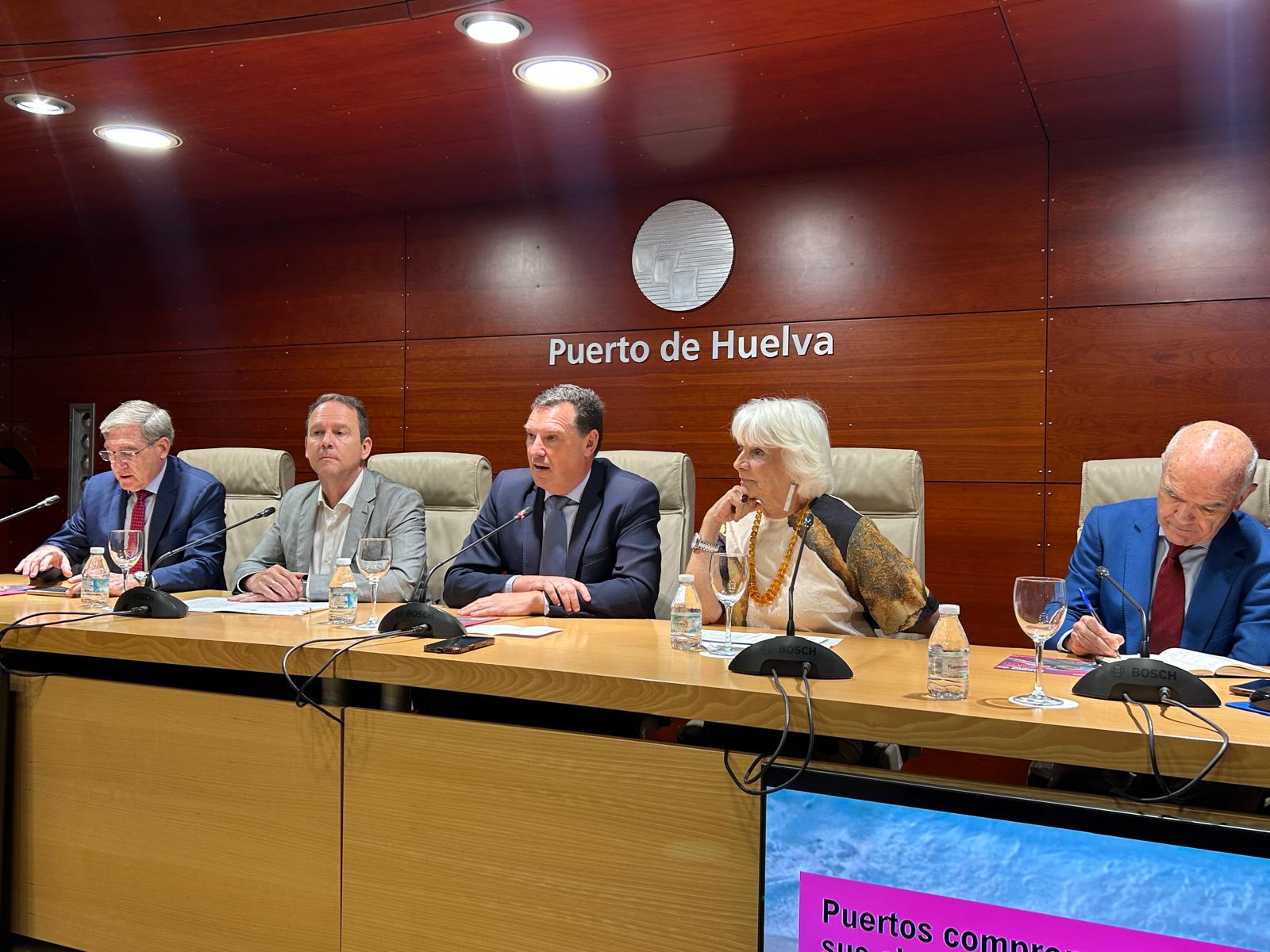
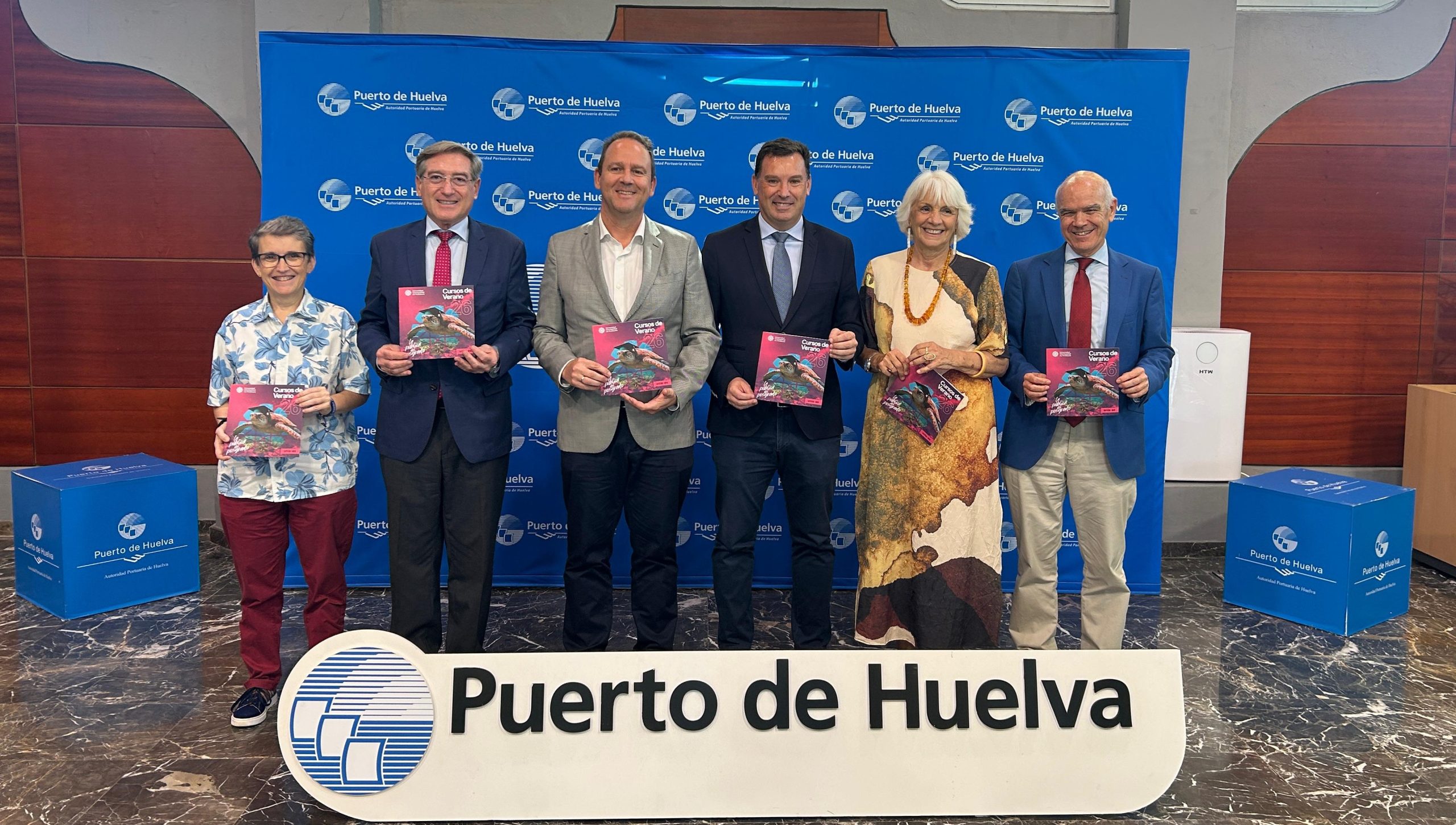
The Port of Huelva today hosted the presentation of the International University of Andalusia (UNIA) summer course “Ports committed to their cities: energy transition, digitalisation and urban transformation”, which will take place in person on 8 and 9 July at the Santa María de La Rábida Ibero-American campus in Palos de la Frontera.
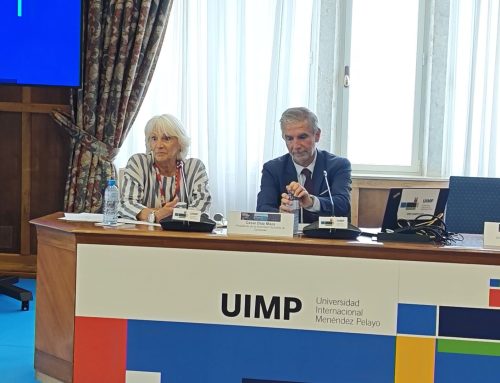
The event was attended by the president of the Port of Huelva, Alberto Santana; the rector of UNIA, José Ignacio García Pérez; the president of RETE, the Association for Collaboration between Ports and Cities, and of the Port of Cádiz, Teófila Martínez; the president of the Port of Seville and course director, Rafael Carmona; the course co-director, José Luis Galán; and the director of UNIA’s La Rábida campus, María de la O Barroso, among other authorities.
The course is organised by the RETE Association in collaboration with the Port of Seville-University of Seville Chair and with the support of Fundación Cajasol.
The president of the Port of Huelva thanked UNIA, the RETE Association and all partners for their commitment to making this course possible, “which once again places Huelva at the centre of the debate on the present and future of ports”. In this regard, Alberto Santana stressed that “the focus of the course is highly timely”, as it will address the role played by “ports committed to their cities at a time of profound transformation, marked by the energy transition, digitalisation and the redefinition of urban spaces”. The president of the Port of Huelva also highlighted that “the Port of Huelva plays a key role as an energy and industrial cluster, leading processes of change that affect not only the port sector but also its social and urban environment, such as the rehabilitation project for the Levante Wharf, which will transform the city and achieve genuine integration with the port”.
The rector of UNIA stated that this course “once again demonstrates the International University of Andalusia’s commitment to the rigorous analysis of major territorial challenges, and ports are today among the spaces where the energy transition, digitalisation and urban transformation converge most clearly”. He also underlined that the La Rábida campus, “due to its own Ibero-American and Atlantic vocation, is a natural setting to address the role of ports as strategic infrastructures and, at the same time, as living parts of their cities”. Finally, he thanked “RETE and the Ports of Huelva, Seville and Cádiz for their involvement in making the International University of Andalusia a meeting place for shared reflection on the future of our region”.
For her part, the president of RETE stated that “for RETE, it is a great satisfaction to be part of an initiative that perfectly reflects some of the principles we defend through our network: collaboration between ports, cities, universities and civil society, as well as the generation and dissemination of knowledge as a tool to address the challenges of the present and the future. Ports are strategic infrastructures for economic development, competitiveness and employment, but at the same time they form part of urban environments that are increasingly demanding in terms of sustainability, quality of life, territorial integration, innovation and citizen participation. Reconciling all these interests requires vision, dialogue and, above all, knowledge. For this reason, academic training plays a fundamental role”.
The president of the Port Authority of Seville and vice-president of RETE, Rafael Carmona, highlighted the appeal of a programme focused on three major areas: energy transition, digitalisation and urban transformation. “Spanish ports are making progress in these areas as a key roadmap for port-city integration processes,” he said. “To address these issues, we have brought together leading lecturers and experts who will allow us to explore topics such as new energies applied to the cruise industry, the social value of this type of tourism, zero-emission and sustainable port-city districts, and the digitalisation and transformation of port environments into smart ports,” Rafael Carmona added.
The main aim of the course is to explore the evolution of ports as drivers of sustainability and urban cohesion. In this edition, the focus is placed on the sector’s social and environmental commitment, identifying energy transition and digitalisation as key factors in redefining the relationship between ports and their urban surroundings.
Thus, on the first day of the course, Wednesday 8 July, the programme will address “Fuels of the future”, “The response of ports to new energy demand” and the case of Seville’s new port district.
On the second day, Thursday 9 July, the topics to be analysed will include “Smart ecosystems: from Smart Cities to Smart Ports” and “Social value in cruise tourism”, concluding with a strategic perspective on the past, present and future of ports.
The meeting is structured around three strategic axes. The first is the challenge of the energy transition, with an analysis of the adoption of clean fuels in the global fleet. This axis will critically address both the need and the opportunity for infrastructure investment, debating whether ports should commit to becoming energy hubs and to the electrification of quays, while assessing the social and environmental return of these assets in response to new global demand.
The second axis will focus on urban transformation and the creation of innovation districts, using Seville’s new port district as a benchmark for understanding how the integration of civic uses and sustainability can coexist with industrial activity.
Finally, the third axis will analyse smart ecosystems and international strategic projection, exploring the transition from the Smart City to the Smart Port through the efficient digital management of resources and comparing successful international models from a perspective that combines historical legacy and digital globalisation.
The programme offers an opportunity to gain first-hand insight into the investments in innovation and sustainability being led by ports such as Barcelona, Cádiz, Huelva and Seville. With the participation of industry leaders, this activity guarantees a comprehensive and practical view of modern port management, providing critical tools to understand how technology, decarbonisation and new urban planning are redefining the boundary between port and city.
More information is available at the following link: