[f

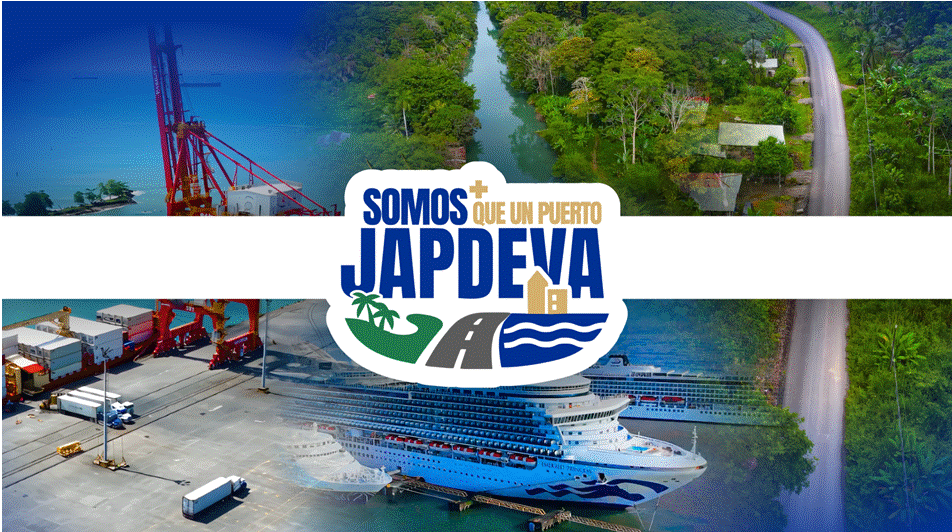
The relationship between port and city is once again at stake in Limón, on Costa Rica’s Caribbean coast. On 25 June 2026, the Legislative Assembly approved, in a unanimous second and final vote, the reform of Article 5 bis of the Organic Law of Japdeva (the Board for the Port Administration and Economic Development of the Atlantic Coast), opening the door to a long-awaited marina and cruise terminal. Pending only the Executive’s signature, the reform marks a milestone for a province that has waited thirty-six years for this infrastructure.
A New Institutional Model
The reform allows Japdeva to enter strategic alliances of up to fifty years — exempt from ordinary procurement procedures — to develop the marina, the cruise terminal and, as announced on the floor, potentially an airport, a hospital and a free-trade zone. In exchange, the institution will collect a canon of at least 1.5% of each alliance’s gross revenue.
This consolidates a transition that began in 2011, when Japdeva — as part of the granting Administration — awarded the Moín Container Terminal to APM Terminals and moved from port operator to landlord, living on the canon rather than on the cargo it once handled. The landlord-port model is legitimate and widespread internationally. But it demands capacities — project finance, long-term contract management — that differ from those of a stevedoring authority, and that Japdeva saw weakened after the labour mobility that followed the container concession.
An Opportunity for the Waterfront
For Limón, the marina and the cruise terminal — sited on the city’s own water frontier — are an opportunity to begin healing a long divorce between port and city. It is not a geographic divorce, since the port was always there, but an institutional and distributive one: cargo was concessioned, rent flowed to the logistics chain and the operator, and the city was left with the costs and little of the value. Well governed, the waterfront can return an economic function to the urban edge, with tourism, public space and local employment — and it can place at its centre Limón’s Afro-Caribbean identity, which a generic tourism product may erase or, properly anchored, celebrate.
The Decisive Factor: A Regulation Still to Be Written
Here lies the decisive point. What will determine whether this project sutures or deepens the port–city divide was not settled by the law, but by a regulation that does not yet exist. The statute protects public ownership — the assets remain public domain, and cannot be sold or mortgaged — yet it authorises their exploitation by a strategic partner for up to fifty years. The real question, then, is not who owns the quay, but who controls Limón’s water frontier for two generations.
The figures announced — some 23,000 jobs — deserve scrutiny: how many will be local, skilled and permanent, and how many merely belong to the construction phase. International experience shows that marinas and cruise operations can function as enclaves that capture value for the operator and a thin layer of tourism actors while the resident population looks on from outside. The rules of citizen participation, local content, productive linkages and identity safeguards — none of which a law guarantees on its own — must be written into that pending regulation.
Port, or Port City?
Limón’s deferred debt will not be settled by signing a law; it will be settled by the institution and the regulation that follow. As RETE has highlighted in cases such as Santos, the difference between an obsolete frontier and a living waterfront lies in shared governance and in returning the sea to the citizens. Costa Rica now faces, on Limón’s edge, the same question that defines port cities everywhere: are we going to manage one more port, or finally govern a port city?
Roger Humberto Ríos Duarte holds a doctorate in Sociology, lectures at the Universidad Nacional (UNA) and coordinates the Comprehensive Research Programme for the Development of Port Cities (Procip) at the Universidad Estatal a Distancia (UNED), Costa Rica. He is a member of RETE’s Board of Governors and former executive president of the Costa Rican Pacific Ports Institute (Incop, 2016–2018).